

The new Power Converter technology will use programmable micro-converters, allowing batteries and power electronics to become more flexible, efficient and compact. Functions including AC and DC conversion and bidirectional charging will also be supported. Currently, generation already achieves up to 3 kilowatts of power and supports AC and DC applications.
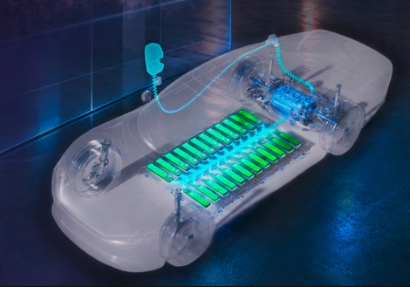
This will in turn open up new design opportunities for electric drive systems and charging functions. The Power Converter will enable the decoupling of the provision of high-voltage voltage from the battery architecture and deliver that instead via software-controlled power electronics.
Several Power Converters connected in parallel will control energy flows individually, providing a stable DC high-voltage output voltage. This will enable overall performance to be flexibly adapted to different vehicle and system requirements. The high-voltage output voltage will be determined by decentralised converters and the software controlling them, instead of the number of battery cells connected in series.
The Power Converter will be able to merge several functions that are currently separate and merge them into one piece of hardware. This will allow more freedom in battery and powertrain design and could improve range and efficiency.
For additional information: