
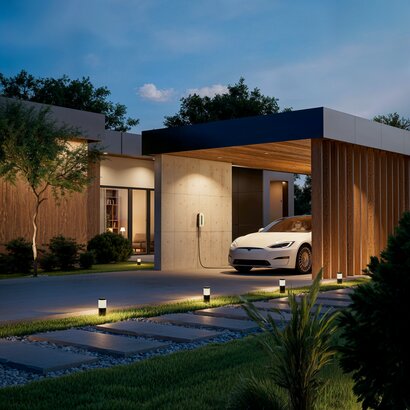
As more homeowners add EVs and other high-power electric technologies, electricians are increasingly encountering homes where available electrical capacity can complicate Level 2 charger installations. In some cases, service or panel upgrades can add scheduling, permitting and coordination requirements that delay project completion.
Featuring SmartAmp, Schneider Electric's integrated load-management technology, Schneider Charge monitors household electrical use in real time and automatically adjusts charging output as demand changes. This helps electricians support Level 2 charging within a home's existing electrical capacity without separate monitoring devices or gateway systems.
“Electricians are looking for solutions that help keep projects moving while delivering the charging performance homeowners expect” said Shawn Bonacorsi, Head of Electrification Solutions, Schneider Electric, North America Operations. “Schneider Charge combines the trust electricians have in Square D with integrated SmartAmp technology that helps reduce installation complexity and support more residential EV charging projects.”
Unlike load-management approaches that require separate monitoring devices or gateway systems, Schneider Charge integrates load management directly into the charger.
Key contractor-focused benefits include:
Included current transformers (CTs) for household load monitoring
No separate gateway devices required
Integrated SmartAmp load management
Support for managed-load installations under UL 3141 where accepted by the authority having jurisdiction (AHJ)
Hardwired residential installation design
Available with NACS (J3400) or J1772 connector options
11.5 kW/48A Level 2 charging output
25-foot charging cable for installation flexibility
By reducing additional equipment requirements and installation complexity, Schneider Charge helps electricians streamline residential EV charging projects and deliver a better customer experience.
SmartAmp continuously monitors household electrical demand and automatically adjusts charging output as conditions change, even when Wi-Fi is unavailable. By managing electrical load in real time, contractors can complete more residential EV charging installations while minimising delays associated with service or panel upgrades.
“For electricians and contractors, Schneider Charge is designed to make installation simpler and more efficient” Mr Bonacorsi added. “By building load management directly into the charger, we’re helping reduce complexity while delivering the Level 2 charging experience homeowners expect.”
Schneider Charge pairs built-in load management with installation support through Qmerit, a home EV charger installation and electrification services provider. Through Qmerit’s installer network, qualified electricians can access residential EV charging installation opportunities and help homeowners complete Schneider Charge installations as part of a professional home charging solution.
Together, Schneider Electric and Qmerit help create a more connected path from charger selection to professional installation, supporting homeowners while giving electricians a clearer route to residential EV charging projects.
Additional Schneider Charge capabilities include:
Available with J3400 (NACS) or J1772 connector options
11.5 kW/48A Level 2 charging output
OCPP 1.6 compliance to support future grid service programs
UL 3141-certified system supporting load calculations, where accepted by the AHJ
Hardwired design for residential installation, with a plug-in version to be introduced in early 2027
Mobile app for monitoring, scheduling and control
25-foot cable for installation flexibility
Schneider Charge is part of Schneider Electric's expanded EV charging portfolio, complementing Schneider Charge Pro, a commercial Level 2 EV charging solution designed for multi-unit dwellings, workplaces, fleets and destination charging. Together, Schneider Charge and Schneider Charge Pro give electricians, contractors and channel partners a broader portfolio of residential and commercial EV charging solutions.
For additional information: