

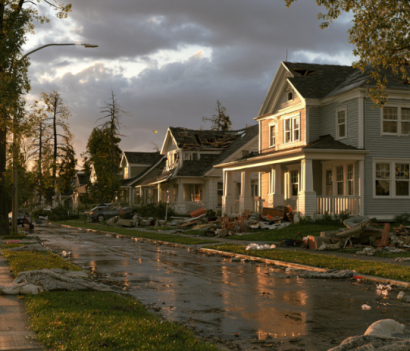
In a 2025 study, Waters et al. modeled how hypothetical energy-efficient upgrades during post-disaster reconstruction might affect regional energy use and emissions in Harris County, Texas. Under its most optimistic scenario, the model projected that such upgrades could see a 2.9% reduction in energy consumption, alongside 3.6% lower carbon-equivalent emissions and 2.2% lower peak electricity demand by 2080.
Those gains compound across an entire housing stock, and few moments offer a better chance to capture them than the rebuild that necessarily follows a disaster.
After floods, hurricanes or wind-driven water intrusion, a water damage restoration company is often the very first contractor on the scene. These crews open walls and ceilings and assess the situation before anyone can make an HVAC, insulation or window decision.
Restoration 1 of Southwest Florida, which has provided water damage restoration services since 2016, knows that immediate safety is the first concern, warning that buckling in walls “also compromises the structural integrity of your home.” However, assessing how far water ingress has reached also reveals where greater improvements can begin.
Certified technicians will remove saturated wall panels, molding and insulation from “10-15 inches above the waterline and below,” advises Restoration 1. These water damage restoration services expose studs, cavities and wiring that normally stay hidden, making it a jumping-off point for further interventions. With a newly clean and empty cavity, insulation is an obvious place to begin.
The Federal Emergency Management Agency states that fiberglass and cellulose are not acceptable below base flood elevation in Special Flood Hazard Areas. Instead, it rates closed-cell foam as acceptable.
The Green Cocoon, specialists in providing eco-friendly insulation solutions throughout Massachusetts, New Hampshire and Southern Maine, explains that closed-cell spray foam combines flood resistance with air sealing. Its tighter thermal envelope means homeowners can potentially “reduce the size of their heating and cooling equipment,” the company notes.
That choice supports flood resilience and long-term energy efficiency. Better-insulated homes need less heating and cooling. Multiplied across a rebuilding region, that reduced workload can lower electricity consumption and ease the peaks that occur when households run their systems simultaneously.
Flooded basement furnaces and ductwork frequently need complete replacement, creating an opening for efficient ductless heat pumps. Mitsubishi Electric Cooling & Heating, a leading manufacturer of HVAC equipment, calls reconstruction a “good time to upgrade to more energy efficient models.”
Split-ductless cold-climate heat pumps fit that moment well, since the outdoor compressor units can be wall-mounted high above future floodwaters, while cutting seasonal energy demand — heat pumps run steadily rather than cycling and have lower operating costs in cold or mild climates.
Heat pumps have been outselling furnaces since 2021, as homeowner adoption increases. Pairing more efficient equipment like this with better insulated homes helps translate that shift into lower operating demand across the rebuilt housing stock. Water heater upgrades can be another potentially high-impact option.
When water damages window frames and surrounding materials, full-frame replacement exposes concealed leaks and gaps. Marvin Windows and Doors, a company that has specialized in window and patio door manufacturing since 1912, describes the job as “a good opportunity to improve insulation behind the trim.”
A full-frame replacement lets builders correct hidden water infiltration, seal air leaks around the rough-opening perimeter and install high-performance low-E glass that limits heating and cooling loss during peak hours.
Across neighborhoods, lower loads reduce the electricity generation needed to maintain indoor comfort. ENERGY STAR reports that replacing single-pane windows with certified modelscan cut energy bills by up to 13% nationwide.
Each upgrade makes sense for a single home, and together they reduce what a house asks of the grid on its hardest days. Repeated across a neighborhood and then a region, those choices add up to lower demand, lower emissions and flatter peaks. Climate disasters are a dreadful loss for individual families, but resilience offers hope, and building back better — and greener — can change a home’s energy profile for decades.