
The future of energy requires safe technologies and strong partnerships. TÜV SÜD is to collaborate with IABG, a company with many years of experience in the fields of analysis, simulation, and testing procedures for mobility, energy and safety. Together, the two companies are pooling their expertise to advance the hydrogen economy even faster, more safely and more efficiently (Hall B7, Stand: 7D25).
Green hydrogen is considered key to the energy transition, but its industrial use depends on materials, components and systems being compatible with hydrogen. TÜV SÜD and IABG support manufacturers and operators in meeting the high safety, durability and performance requirements. Tests involving with pressures of up to 400 MPa, material compatibility under hydrogen pressure, and EMC testing for mobile and stationary systems provide the basis for reliable everyday technologies.
With its H2 readiness certification, TÜV SÜD has created a standard that confirms the future viability of manufacturers' and operators' products at an early stage. Examples include the P003 and P005 test standards, which were developed in collaboration with manufacturers to assess the resistance of materials and components to hydrogen. Specific guidelines are also available for combined cycle and engine power plants, for example, to help users to draw up a clear roadmap for transitioning to hydrogen operation and create investment security. Furthermore, voluntary certification programmes based on international standards (including IEC 62282, ISO 19880-X and ISO 19887) ensure transparency and trust throughout the entire value chain.
TÜV SÜD's testing procedures cover the full range of pressures and temperatures for hydrogen, helium, and gas mixtures. These range from functional and service life tests to hydraulic burst tests, gas flow tests and leakage and permeation tests on pressure vessels. The hydrogen compatibility of metallic and non-metallic materials is also tested. Appropriate product and system certificates complement the testing services.
Manufacturers of fuel cells, electrolysis systems and hydrogen-carrying components, such as those used in vehicles or filling stations, benefit from TÜV SÜD certification programmes that ensure safety and quality standards. These are based on international standards such as IEC 62282 (fuel cells), ISO 22734 (electrolysers), ISO 19880-X (filling station components), ISO 19887 (vehicle components) and ISO 17268 (refuelling couplings and tank nipples).
In addition, TÜV SÜD's experts show the right way to declare a CE marking or obtain type approval. Taking relevant norms and standards into account ensures product-related qualification to cover product liability.
As well as technical testing, TÜV SÜD focuses on qualifications, covering everything from material compatibility and power-to-gas applications to the safety of hydrogen-powered rail vehicles. The TÜV SÜD Academy provides specialists in development, operation and maintenance with practical know-how. The role-based qualification scheme covers the entire hydrogen value chain, including basic knowledge of electrolysis processes, storage technologies, fuel cell applications and regulatory issues. Topics covered include declarations of conformity and the certification of green hydrogen.
The focus is always on safety and in accordance with standards handling hydrogen, from specialised topics such as electrolysis processes and storage technologies, to risk and safety assessments, and individual training courses for customers.
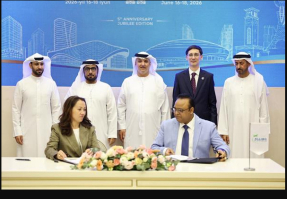
Through its collaboration with IABG, TÜV SÜD is broadening its expertise to encompass cutting-edge methods in simulation, analysis, and system testing. The result is comprehensive solutions covering everything from materials testing to the full integration of hydrogen systems, which sends an important signal regarding the industrial-scale adoption of hydrogen technologies.
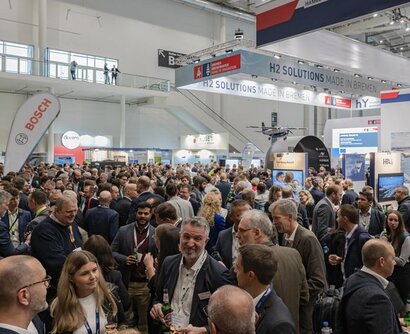
Hydrogen Technology Expo Europe is Europe's largest trade fair focusing exclusively on modern hydrogen and fuel cell technologies. Every year, leading technology providers, system integrators and users from around the world gather in Hamburg to present the latest developments, establish business relationships and help shape the future of the hydrogen economy.
For additional information: