
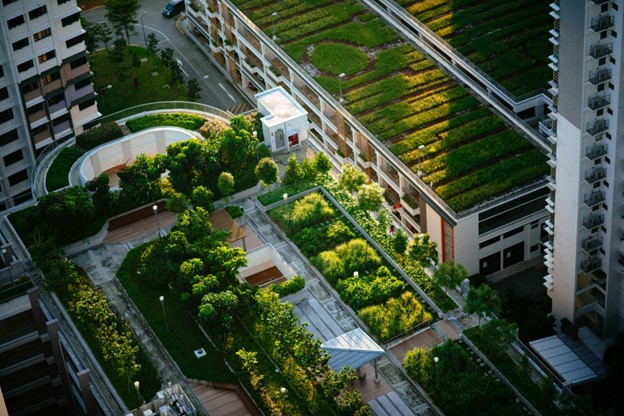
Biophilia refers to the innate human instinct to seek connections with nature, literally translating to “love of life.” As modern life widens the disconnect between people and the natural world, biophilic design is a conscious effort to restore that connection in built environments. It is a holistic framework that provides several ways to experience nature in built spaces:
When applied strategically, biophilic design principles create a high-performance building envelope that works with natural energy flows rather than fighting against them. Green architecture builds on this, leveraging the connection to nature to achieve lower energy bills and better solar performance.
Passive solar design uses the building’s structure and orientation to maintain comfort, which reduces the need for active, energy-consuming systems. Here are several key techniques and examples:
The building that architects Marner and Elisabeth Post-Marner built for their family is a great example of passive solar design. The structure’s average monthly energy cost is around $160, with projected 30-year savings of over $125,000. The modern home features large, south-facing windows, exterior sunshades and precise orientation to leverage solar energy. Its super-insulated envelope and airtight construction lock in passive heat gains.
Thermal mass is the ability of a material to absorb, store and later release heat energy. Think of a stone wall or a thick concrete floor soaking up the sun’s warmth during the day and then slowly radiating the heat back into the room as the temperature drops at night. Common high-density materials that work for this purpose include concrete, brick and stone.
Beyond thermal mass, biophilic design encourages the use of natural materials for their authenticity. Material honesty, or the “truth of materials,” is a philosophy that focuses on letting a material be true to its nature instead of forcing it to be something else. For example, wood should look like wood, not be modified to look like stone or any other material. Material honesty rejects synthetic limitations and fosters a deeper, more authentic connection to the natural world.
Thermal mass and material honesty are intertwined in sustainable architecture. When architects follow the latter philosophy, they often naturally select the dense, authentic materials that provide the best thermal mass. This creates a design that fosters both aesthetic warmth and a connection to nature while also working as a passive heating and cooling system.
Daylighting involves intentionally designing buildings to maximize and distribute useful, high-quality natural light. It aims to reduce the need for artificial lighting and create healthier, more visually comfortable spaces. Here are methods that architects use to control and deepen light penetration:
Building lighting accounts for over 15% of all electricity use in the U.S. Using daylighting as part of a structure’s passive solar design can significantly conserve energy, as it reduces the need to rely on artificial lights. Using smart technology can optimize this setup. Combining natural light optimization with smart sensors can improve overall energy efficiency by up to 30%, as these features dim or turn off lights when sufficient daylight is present.
Living infrastructure describes green roofs, living walls and integrated landscaping that serve specific engineering purposes, such as cooling. A green roof or vine-covered facade acts as a layer of insulation, preventing solar radiation from heating the building’s roof membrane and providing shade.
Evapotranspiration is another benefit. As plants release water vapor into the air, it evaporates, which actively cools the air. It’s why a large green roof or lush landscaping can create a palpable micro-climate that’s cooler than the surrounding built-up area.
Biophilic architecture can also boost solar panel performance. Solar panels can lose efficiency as their surface temperature rises. The ambient cooling effect of a large-scale green roof can lower air temperatures around the panels, allowing them to operate closer to their optimal temperature and generate more electricity.
The 145 Baltimore Avenue project is a great example of living infrastructure. Built specifically to combat high heat vulnerability in downtown Asheville, it helps reduce the urban heat island effect. This green roof provides stormwater control and fosters biodiversity, reinforcing the multi-faceted value of biophilic solutions.
The greatest gains in sustainability come from designing smarter structures that learn from the efficiency of natural systems. The goal of sustainable, biophilic architecture is to erase the line between built and natural environments. It’s to create a world where buildings function like ecosystems, harvesting their own energy, recycling their own water and breathing in harmony with the world around them.