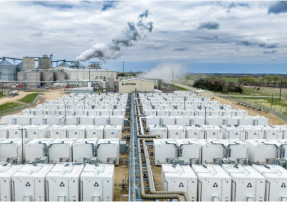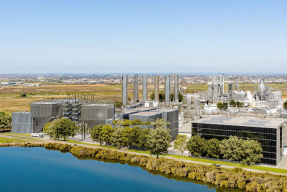

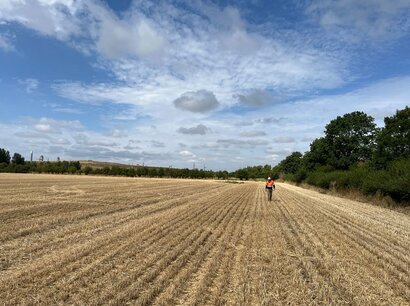
Didcot BESS is a transmission connected asset that will connect to the UK National Grid via an underground cable to the nearby Didcot Substation located south-west of the site.
Last year, National Grid commenced upgrades to the existing 400 kV Didcot substation that included three new electrical equipment bays and three supergrid transformers.
The expanded facility will enable BESS projects like Didcot as well as new advanced data centres to connect to the UK’s electricity transmission network. Didcot Substation is sited two miles from the UK’s first designated AI Growth Zone at Culham, also in Oxfordshire.
Eku Energy is well placed to develop, construct and operate such projects of significance for the National Grid. Although Didcot BESS is Eku Energy’s first transmission connected project in the UK, the company has experience in developing, constructing and operating complex high voltage transmission connected projects in Australia, including the 200 MW/400 MWh Rangebank BESS near Melbourne, Victoria.
Construction of the Didcot project is set to begin later this year with connection scheduled for 2028.
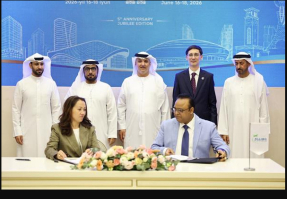
Eku Energy acquired the project from TBC Partners, a London-based joint family office that specialises in energy transition, data centre and other impact infrastructure projects. TBC Partners were represented by Knight Frank Capital Advisory in the sale process of Didcot.
“Battery storage is an essential part of the UK’s energy infrastructure” said Eku Energy CFO Erin Lee, commenting on the acquisition. “It provides all-important flexibility and storage capacity to store surplus energy and release it back on to the grid when and where it’s needed. Sites like Didcot BESS play an integral role in migrating the UK towards an electrified, low-carbon energy system. Eku Energy’s goal is to continue growing our BESS footprint in the UK and develop, build and operate projects that will help the country meet its growing power needs in a way that is clean and sustainable.”
Eku Energy currently develops, builds and operates several BESS projects in the UK, in Germany, Italy, in Japan, Australia and New Zealand.
For additional information: