
Since the beginning of the year, European Energy has brought battery systems online at Kvosted, Agersted, Stouby, Kragerup and Måde in Denmark, as well as Anykščiai in Lithuania and Saldus in Latvia.
“Battery storage is developing into an important part of our business. We have spent the first eight months of the year building an operational portfolio, while at the same time advancing a much larger pipeline across our markets,” said Knud Erik Andersen, CEO of European Energy.
“Having capabilities across development, construction, operation and energy trading gives us flexibility in how we structure these projects and how long we retain ownership.”
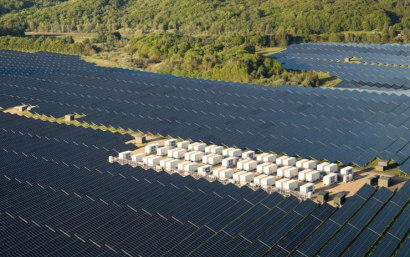
The batteries brought online so far in 2026 are co-located with renewable generation, allowing European Energy to add storage capacity to sites where the company already has experience with the underlying renewable asset, grid connection and local electricity market.
For European Energy, this creates an additional opportunity to enhance existing renewable projects and develop hybrid assets with a broader revenue base.
Beyond the value created for individual projects, battery storage can also support the wider electricity system. By storing electricity when renewable generation is high and releasing it when demand is higher, batteries can help reduce pressure on the grid, limit curtailment of renewable generation, and help balance fluctuations in electricity supply and demand. This can also help reduce periods of very low or negative electricity prices and dampen price spikes when supply is constrained.
“Co-location changes the economics of a renewable project, supports the grid and maximises the use of renewable power. We are not only looking at the return generated by the battery itself, but at the value it can create across the entire asset,” said Mads Lykke Andersen, VP and Head of Technology Development at European Energy.
European Energy expects to continue its roll-out of BESS across its portfolio with upcoming deployment in Denmark, Australia, Poland, Lithuania, Latvia, the United Kingdom and Germany.
The growing portfolio also broadens the range of investment opportunities that European Energy can offer to infrastructure and renewable energy investors. Depending on the individual project and market, batteries can be retained as part of European Energy’s operating portfolio, combined with renewable generation in hybrid assets or divested as part of the company’s project sales activities.