
The project is being developed by Jera Nex bp, a 50:50 joint venture established by Japanese power generation company Jera and global oil and gas corporation bp. It was one of the first projects to be awarded a feasibility licence in the Gippsland offshore wind zone. It was awarded Major Project Status by the federal government in October and is considered as playing a key role in reducing the dependency of the state and the Australian national grid on coal.
The proposal is for the construction, operation and decommissioning of a 1 GW offshore wind farm in the Gippsland, Victoria, offshore wind area (OEI-01-2022). This facility will be connected to the Victorian electricity network via VicGrid’s proposed connection hub near Giffard.
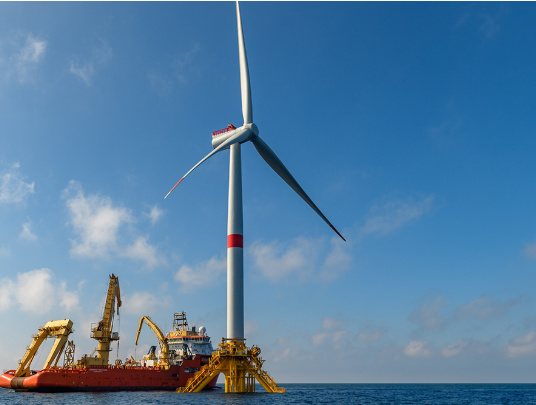
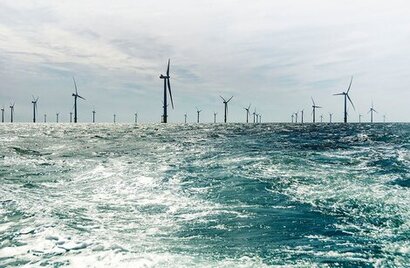
The wind farm will consist of up to 70 offshore wind turbines with the 163 square kilometre licence area, depending on the turbine type and generating capacity. Each turbine will have a capacity ranging from 15 to 23 MW to achieve a nominal capacity of 1 GW, with upper blade tip heights of between 266 metres and 327 metres above mean sea level. The foundations could include include jackets, monopiles, gravity-based foundations or a combination of all these.
A network of 66 kV or 132 kV high voltage alternating current (HVAC) subsea inter-array cables will connect the turbines to each other or to offshore substations. These cables will be buried approximately 0.5 to 2 metres below the seabed or armoured (e.g. rockbags or mattresses) for protection.
One or two offshore substation/s will be constructed to transform the electricity from the inter-array cables to 275 kV for export to the grid. These platforms will comprise electrical equipment such as transformers, generators, switchgear, batteries, fire system and facilities for operational and maintenance activities.
Two 275 kV HVAC cables will connect the wind farm to the shore crossing to facilitate export of generated renewable energy to the grid. If two offshore substations are constructed they will have one export cable each leading from them. If one offshore substation is constructed, two export cables will lead from it. Each cable construction corridor is expected to be around 12 to 20 kilometres in length (subject to change depending on final design) and approximately 30 metres wide (to allow for micro-siting). The disturbance footprint is an indicative 10 metre width. These cables will be buried approximately 0.5 to 2 metres below the seabed or armoured (e.g. rockbags or mattresses) for protection.
Potential locations at McGaurans Beach are under consideration for shore crossing works. The HVAC export cables (2 x 275 kV circuits, each circuit comprising a single 3 core 275 kV cable) will be pulled from approximately 600 to 1200 metres offshore (depending on water depths) to an onshore jointing pit which connects the offshore and onshore cables. The jointing pit site(s) will be approximately 10 by 3 metres for each cable, plus link boxes (1 by 1 metre) for each cable.
Onshore cables (2 x 275 kV circuits, each circuit comprising 3 single core cables) will be between 6 and 10 kilometres in length and will transmit electricity from the shore crossing location to VicGrid’s proposed connection hub near Giffard where the electricity would be transformed to 500 kV. The cables will be installed within an onshore cable construction corridor, approximately 50 metres wide (including trench area, access road and buffer).
During operation, the easement will be approximately 30 metres wide. Cables will be installed in lengths and connected with sub-surface jointing bays. This is likely to include an indicative 18 to 28 joint bays of an indicative 10 m length by 3 m width and 2m pit depth.
A new 275 kV/500 kV substation will be developed within VicGrid’s proposed connection hub. VicGrid’s proposed connection hub will provide future offshore wind energy facilities with a shared connection point to access the grid. The proposed onshore substation is included in VicGrid’s Gippsland Offshore Wind Transmission 2 GW Project (EPBC 2024/09980) assessment.
Temporary construction areas will be required (e.g., laydown areas, site offices and access tracks). No major road upgrades are expected to be required. However, depending on cable route selection, minor road upgrade works such as road widening and resurfacing may be required for construction vehicles.
Construction of the project is expected to take two to three years. Once operational, the facility is expected to remain so for a period of forty years before decommissioning.
A public consultation was held between 5th August and 7th October 2022, during which 765 submissions were received. Government representatives briefed members of the public on elements of the proposed project, providing an opportunity for questions and discussion of key issues. Additionally, local industry stakeholders and the wider community were invited to participate in five online sessions during the consultation period, aimed at specific groups including aviation and emergency services, commercial fishing, tourism, community groups and recreational fishing.
Consultations were also held with relevant Australian and Victorian Government agencies that have policy and regulatory oversight over marine users and interests.
Detailed environmental assessments and marine surveys began in 2024 and will continue until 2029.
The project is expected to create 15,000 jobs during construction and 7,500 ongoing jobs.
Around 400 people from the community of Seaspray attended a protest meeting last month, with concerns about the turbines, which will be visible from the beach along the coast from Seaspray to Woodside.
However, David Ghaly, project director for Blue Mackerel, said that although he understood the concerns, the project is limited to the licence area, within 10 kilometres of the shore.
“The turbines are in a zone that was awarded to us by the Commonwealth government” Mr Ghaly added, speaking to ABC Australia News. “They will be visible from the shore but we can't move our licence area. We have one of the smallest licence areas that was awarded … so we are limited in what we can do in terms of how visible the wind farm is from the shore. We can't make the turbines invisible, so that impact will be there. Whether it's our project or another project, they will be visible. What we are trying to do at the moment is to move the conversation to a community benefits program. We'd like to hear from the community about how we can best be a responsible project, given that we will be there for 35 years.”
For additional information: