
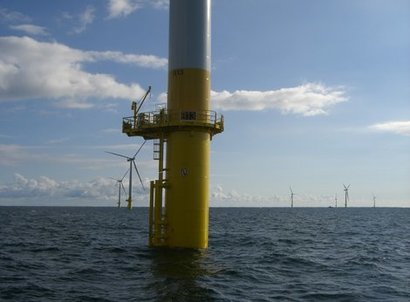
The Department is also going to investigate how the construction and operation of wind turbines might affect migratory bird populations. As part of an effort to elevate local voices, the Department will also consult with tribes, local communities and the fishing industry regarding offshore wind projects.
In particular, Secretary’s Order No. 3437 “Ending Preferential Treatment for Unreliable, Foreign-Controlled Energy Sources in Department Decision-Making” includes a call for the identification of policies that the Trump Administration regards as biased in favour of wind and solar energy and halting support for energy supply chains controlled by foreign rivals.
Another policy will consider withdrawing areas onshore that have a high potential for wind energy development, specifically mentioning the termination of these Wind Energy Areas as a way in which to ensure power grids are not underpinned by energy sources it views as “unreliable”.
Burgum commented that the policy changes represent a “commonsense” approach that puts Americans interests first.
“The Department of Interior’s latest directives continue a false narrative on an established American industry that will prevent an important source of baseload power generation from reaching the grid when ratepayers are already feeling the effects of rising electricity prices” commented Stephanie Francoeur, SVP of Communications & External Affairs at Oceantic Network. “This will result in even higher energy costs, increased blackouts, job loss, and billions of dollars in stranded investments, further delaying shovel-ready projects supported by a domestic heavy manufacturing supply chain renaissance that spans 40 states.
"Crippling affordable and reliable wind energy makes no economic sense and undermines the administration's 'all-of-the-above' energy strategy. We urge the Department to adopt policies which put all sources of American energy on an even playing field.”
In other news, the Business Council for Sustainable Energy has responded to the draft revision by the US Environmental Protection Agency (EPA) of the US endangerment finding for greenhouse gases.
“BCSE opposes EPA’s proposal to rescind the endangerment finding” said BCSE President Lisa Jacobson. “Our coalition supports EPA’s authority to regulate greenhouse gas (GHG) emissions, based on long-standing scientific evidence that confirms their harmful effect on people and our planet. Many of the technologies needed to mitigate these harms are already commercially available and cost-effective today. Used to their full potential, these solutions are key to successful emissions reductions and air quality improvements – while also achieving the energy dominance goals of the Trump Administration. Now is not the time to disrupt US policy that has been consistent for nearly two decades. Long-standing federal policy provides the business certainty needed to enable energy sector planning and investment which will provide homegrown energy for decades to come. Our coalition supports market-based, economy-wide approaches to reducing GHG emissions that utilise performance-based metrics while also providing flexibility to states and regulated facilities.”
The endangerment finding has been effective in spurring efforts by the US public and private sectors to reduce GHG emissions. According to the 2025 Sustainable Energy in America Factbook, total US greenhouse gas emissions are 15.8 percent below 2005 levels. Notably, US power sector emissions have declined steadily over the past decade, ending 2024 at 41 percent below their 2005 peak.
“Reversing course on the endangerment finding threatens market pathways for small businesses around the country who are innovating and deploying cutting-edge technologies to decarbonise the US economy” added Lynn Abramson, President of the Clean Energy Business Network, BCSE’s small business division. “This will create a dampening effect on US competitiveness at a time when the rest of the world continues to move forward in modernising and diversifying energy systems.”
For additional information: