
The Maryland Department of the Environment estimates that achieving state carbon reduction targets could generate $135 billion in societal benefits. The report concludes that adopting a Maryland Clean Fuel Standard would accelerate progress toward these goals while reducing energy costs for consumers and improving statewide economic and environmental resilience.
Key Findings
Antoine M. Thompson, Executive Director, Greater Washington Region Clean Cities Coalition (GWRCCC) stated, “Maryland now has a clear roadmap showing that cleaner, cheaper, and healthier transportation options are available today—and biofuels are one of the fastest ways to get there. Higher blends like E15 and B20 can be deployed immediately, using existing vehicles and infrastructure, to lower emissions, strengthen the state’s economy, and improve the state's very vulnerable energy security.
"This report proves Maryland can meet its climate goals while lowering costs for families, farmers, small businesses, and truckers.”
Jill Hamilton, Chair, GWRCCC Board of Directors, and President of Sustainable Energy Strategies, Inc., stated, “The Task Force brought together an unprecedented coalition of agriculture, energy, environmental, and public-health leaders. What we found is unmistakable: biofuels are a powerful complement to electric vehicles (EVs) and other clean technologies, offering Marylanders affordable choices that reduce pollution right now. These findings give Maryland the opportunity to lead the nation in clean transportation.”
The Task Force report outlines how Maryland can benefit from the Maryland Commission on Climate Change’s recent recommendation for the state to adopt a clean fuel standard. A new Clean Fuel Standard will help meet the state’s Climate Solutions Now Act (CSNA) requirement of a 60% reduction in greenhouse gas (GHG) emissions by 2031 and fill a gap created by a rollback in federal environmental regulations for clean vehicles and trucks, as well as federal funding for EVs and EV infrastructure.
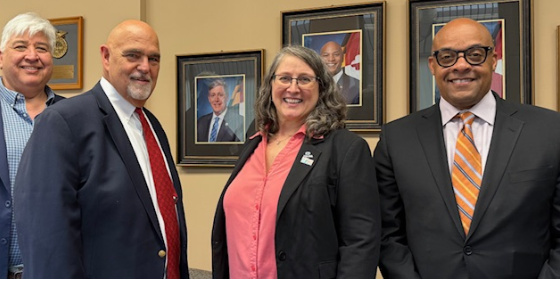
PHOTO: Photo (Right to Left): Antoine Thompson, Executive Director, GWRCCC, Jill Hamilton, President, Sustainable Energy Strategies, Inc. (GWRCCC Board Chair), Burl Haigwood, SESI/GWRCCC/Task Force Coordinator. Luis MacDonald, President, Autoflex Fleet, (GWRCCC Board Member).