
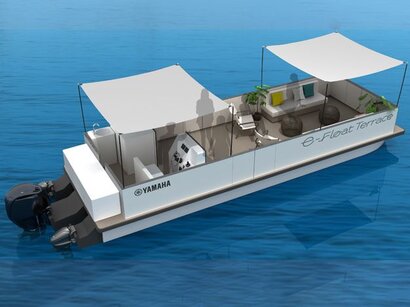
The product has already been installed into “e-Float Terrace”, the new electric boat from Yamaha, which is scheduled to begin offering cruise experiences in Yokohama, Japan, this October.
While their low cost and high current output have ensured that lead-acid batteries remain widely used in vehicles and industrial backup systems, demand is rising for lithium-ion alternatives that are lighter, more efficient, with a longer service life, and fewer environmental impacts.
The new Toshiba battery pack has been designed to meet the D23 size specified by the Japanese Industrial Standard for starter lead-acid batteries (JIS D 5301), enabling straightforward replacement of existing 24V lead-acid units.
It can be deployed as a standalone unit or configured in series and parallel - up to 2 in series and 6 in parallel (48V, 5.76kWh) - to meet diverse power requirements. It also has the capability to handle high-load operations, such as engine starting and therefore is suitable for use in marine vessels, commercial vehicles such as buses and trucks, and heavy equipment such as construction and agricultural machinery.
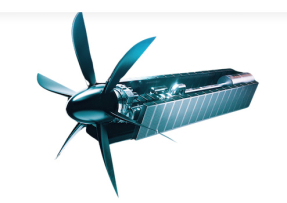
Yamaha Motor is using the battery in “e-Float Terrace,” electric boat designed for sightseeing. The vessel is equipped with Yamaha Motor’s proprietary HARMO electric propulsion system, powered by twenty-four SCiB 24V battery packs configured as two sets of 2 in series and 6 in parallel (48V, 11.52kWh).
Cruise experiences aboard the “e-Float Terrace” will begin this October, offering scenic views of Minato Mirai seafront district in Yokohama, Japan. The initiative is part of Yamaha Motor’s broader effort to promote environmentally sustainable urban tourism by electrifying next-generation mobility, decarbonizing marine transport, and enhancing the value of tourism resources.
“We engineer SCiB batteries for outstanding reliability in demanding environments” said Toshihiko Takaoka, Vice President, Battery Division of Toshiba Corporation. “The 24V battery pack combines excellent low-temperature performance and vibration resistance with robust waterproofing certified to the IPX9K and IPX7 standards. Its exceptional long-life performance helps reduce maintenance requirements for electric boats. To extend these advantages to more partners, we will continue to pursue further orders across marine and other applications.”
SCiB batteries have been developed to deliver high safety, long life, excellent low-temperature performance, rapid charging capability, high input/output power, and a wide usable state-of-charge range. Building on these strengths, Toshiba will continue to expand its SCiB product lineup and promote adoption across mobility, industrial, and energy storage fields, supporting the global shift toward cleaner, more efficient, and sustainable energy solutions.
For additional information: