
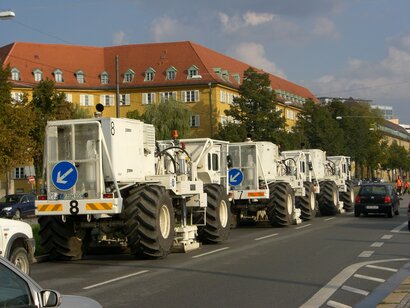
The Bavarian capital and the surrounding communities want to explore the further development potential of this regional energy resource and make its use sustainable. as part of the GIGA-M research project. The largest measurement campaign ever conducted in an urban settlement area in Germany will begin in the first half of 2026.
The GIGA-M research project, funded by the Federal Ministry for Economic Affairs and Energy (BMWE), is a joint venture between the Technical University of Munich (coordination), Stadtwerke München (seismic management), Energie-Wende-Garching (seismic partner), the Ebersberg-Munich Energy Agency, the district of Munich and the state capital of Munich.
The aim of the seismic campaign is to identify suitable hot water reservoirs beneath Munich. To this end, the subsoil is being surveyed seismically over a large area in order to obtain an accurate picture of the geological structures. The data obtained will also help to select specific locations for new geothermal plants, optimally integrate existing plants and further expand the supply of renewable heat. In this way, GIGA-M is laying the foundation for a secure, climate-friendly and affordable heat supply and bringing the Munich region an important step closer to achieving climate neutrality by 2045.
“Munich, one of Germany's largest metropolitan areas, is increasingly turning to geothermal energy” said Dr Maik Tiedemann, CEO of DMT GmbH & Co. KG and CEO of the TÜV NORD GROUP Business Unit Energy & Resources. “The planned Acceleration Act will further strengthen the legal framework for geothermal energy. We expect demand to remain high, as many municipalities are looking for ways to achieve their climate targets within the framework of municipal heat planning.”
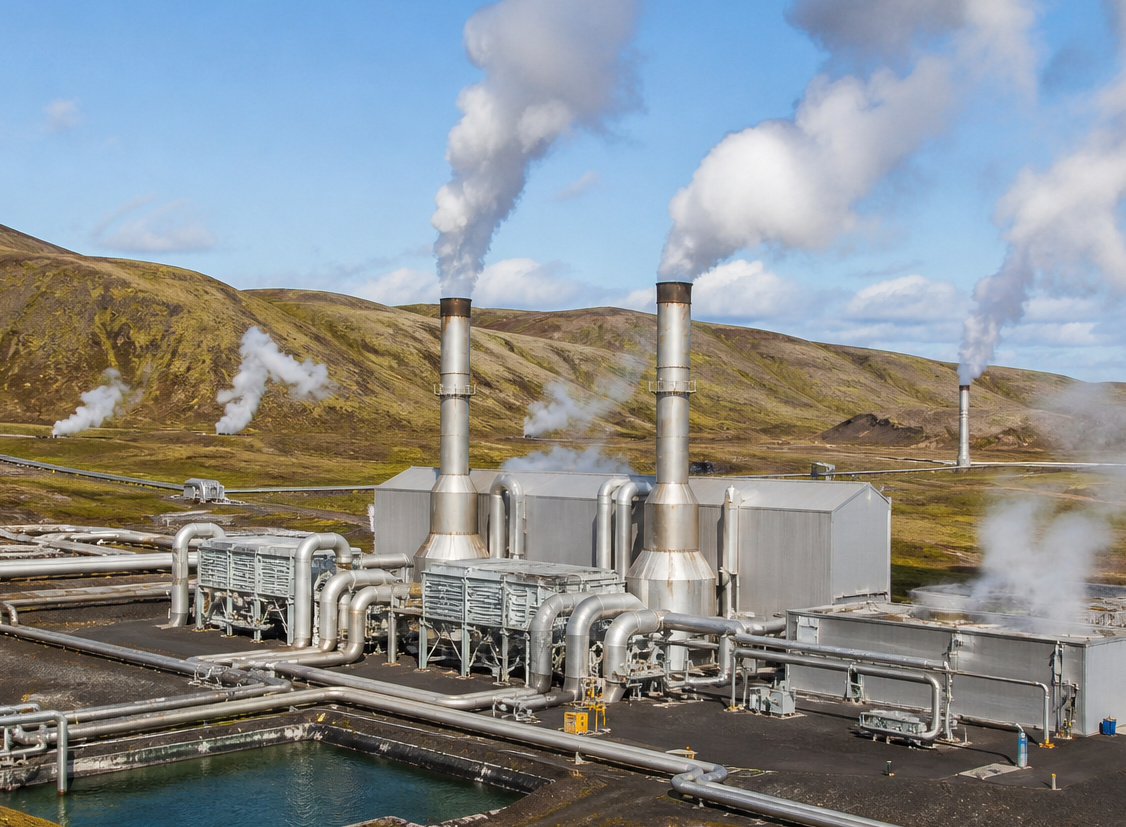
The greater Munich area is located in the pre-Alpine Molasse Basin, a region that is particularly well suited for geothermal energy use. DMT has been supporting the Munich region in exploring the deep subsurface for usable heat since 2007. The new, large-scale seismic measurement campaign is intended to create the data basis for a significant expansion of geothermal capacity from the current level of approximately 400 megawatts to over 1 gigawatt – enough to supply tens of thousands of additional households with climate-friendly heat. With a measurement area of 1,100 km², this is the largest seismic survey ever conducted in a German settlement area.
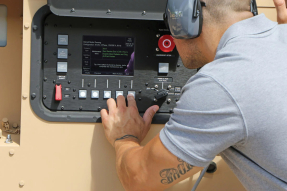
To capture the potential deep underground, special measuring vehicles (vibro trucks) send light seismic pulses into the ground. These pulses are reflected by rock formations and recorded by a network of geophones (receiver modules). The data obtained is then used to create a detailed 3D model of the subsurface.
Based on this model, precise target areas for the extraction of hot thermal water can then be determined.
“Previously, the largest contiguous urban area in Germany to date was seismically surveyed in Münster at the end of 2024 – now Munich is taking over” added Dr Christian Henke, Head of Seismic Exploration & Processing at DMT. “With more than four times the area of the project in Münster, the exploration in Munich is of a unique scale. Such large-scale investigations in densely populated urban areas are challenging, but with the necessary expertise they are feasible and indispensable if we want to tap into the geothermal potential for a future-proof heat supply.”
Deep geothermal energy plays a central role in the transformation of heat supply in Germany. Its potential is enormous: according to the German Geothermal Association, it could cover at least 25 percent of the country's heat demand. Its importance is also increasingly being recognised at federal level – the German government is providing over 1.5 billion euros for expansion by 2030. The new ‘Deep Geothermal Energy for Heating Networks’ funding programme provides targeted support for municipal projects in particular.
According to the German Federal Environment Agency, the use of deep geothermal energy can save up to 40 million tonnes of CO₂ annually – a decisive contribution to achieving climate neutrality by 2045.
Public acceptance is also high: According to recent surveys (e.g. by Fraunhofer IEG, 2024), more than 60 percent of Germans support the expansion of geothermal energy use, especially if the potential impact on residents remains low. Never before has deep geothermal energy been so high on the political agenda – and it is becoming a key factor in ensuring a secure, affordable and climate-neutral heat supply.
For additional information: