

How many solar, wind and battery assets are now installed across Europe and how complex are these systems?
An asset can be almost anything now, from a heat pump or an electric car sitting in a driveway to a home battery, a rooftop solar installation or a large wind site. By the end of 2025, Europe had approximately 405 GW of solar PV, 304 GW of wind capacity and more than 100 GWh of operational battery storage. But the number that says more about how the system behaves is the millions of small electrical devices now sitting behind ordinary household meters. Europe has moved from a system built around a few hundred large power stations to one made up of many millions of small ones.
That creates a much more complex operating environment. It is no longer simply a question of connecting more megawatts. Rooftop solar, home batteries, electric cars and heat pumps all have to work with each other and with large scale wind and solar, while responding to electricity prices, network constraints and different market signals. The complexity comes not from the number of installations but from the number of decisions that have to be made around them, every quarter hour, in millions of places at once.
An operator serving homes may have tens of thousands of households on its books, each with some mix of solar, a battery, a car and a heat pump, and every one of those on a different make of inverter, charger or meter. An operator running its own generation faces the same problem in a different shape, with hundreds of distributed sites and exposure to day ahead, intraday, congestion management and balancing markets. In both cases the assets need to be visible, controllable and commercially coordinated. Otherwise perfectly good physical assets underperform, because the data, control and market systems around them stay fragmented.
How difficult is it for many operators to manage these systems effectively? What is involved in this?
For many operators, it is becoming increasingly difficult because the operational model has not evolved as quickly as the portfolio itself.
A fairly common set-up is still one system for asset monitoring, another for trading and then spreadsheets or separate software for settlement and reporting. That can work when you have a handful of assets participating in one market. Once you are responsible for hundreds of distributed sites and are operating across several electricity markets, those disconnected systems become a genuine operational constraint.
Managing a portfolio effectively means being able to see what every site is doing in real time, forecast how it is likely to perform, decide whether it should generate, curtail, charge or discharge, send the relevant instruction, verify that the instruction has actually been executed and then understand the financial outcome.
That last point is important. Sending an instruction is not the same as knowing it happened. An operator needs confirmation that a battery charged, a solar site curtailed or a demand response was delivered as expected. Across hundreds of sites, connectivity issues and unstable legacy systems can make that surprisingly difficult.
What are the resulting adverse impacts on the growth and effective operation of European renewable energy, and what are the cost impacts?
In parts of Europe, renewable generation is being built faster than grids and operating systems are adapting to accommodate it.
If renewable energy is produced in a place or at a time when the network cannot transport or absorb it, generation may have to be curtailed. That means wasted clean electricity, lost revenue for operators, higher system costs and slower displacement of fossil fuels.
The scale of the infrastructure challenge is significant. The European Commission estimates that around 1.2 trillion euros will need to be invested in European transmission and distribution grids by 2040. At the same time, the Commission’s Joint Research Centre has estimated that, under a business-as-usual grid-expansion scenario, as much as 310 TWh of renewable generation could be curtailed in 2040 because of network limitations.
There is also a less visible commercial cost. A battery that sits idle during a valuable balancing event is missing revenue. A solar installation that cannot react to congestion may be curtailed or continue generating into an unfavourable price. So increasingly the value of a megawatt-hour depends not only on whether it is generated, but when it is generated, where it is generated and whether the asset can respond to what the electricity system needs at that moment.
How serious is grid congestion due to this situation?
The Netherlands is a particularly useful case study because rapid growth in renewable generation and electrification has collided with acute constraints on the electricity network. Grid congestion is no longer a future risk there; it is a daily operational constraint. In some areas, there is simply not enough network capacity to accommodate all the electricity businesses and renewable generators want to transport. Companies seeking new or expanded connections can therefore face waiting lists, while renewable generators may have to reduce output when the grid cannot absorb it. It is easiest to see on an ordinary street. Everyone gets home around six, plugs in the car and turns up the heating, and the cable under that street was never sized for all of it happening at once. Nobody built the wrong thing. The pattern of demand simply changed faster than the copper in the ground.
It is important to distinguish between the cause of congestion and the difficulty of managing it. The fundamental problem is physical: renewable generation and electricity demand are changing faster than the grid can be reinforced. But operational fragmentation makes the problem harder to deal with. If hundreds of assets cannot be seen and controlled coherently, it is much more difficult to reduce generation, store electricity or change consumption at the specific time and location where the network needs flexibility.
The Netherlands has shown that grid congestion can become a limiting factor in the energy transition even in a country that has been very successful in deploying renewables. The challenge is no longer simply how quickly we can build clean generation, but how intelligently we operate the grid and the assets connected to it so that this generation can actually be used.
How is The Netherlands, in particular, attempting to resolve it?
There are really two parts to the solution.
The first is physical: across Europe, there is an undeniable need for more cables, substations, interconnectors and overall grid capacity. There is no software solution that eliminates the need for that investment.
The difficulty is that major grid infrastructure takes years to plan, permit and build. So the second part of the Dutch response is increasingly about flexibility: making much better use of the infrastructure and renewable assets that are already connected while physical grid capacity catches up.
That means using storage, flexible consumption and controllable renewable generation, alongside congestion-management mechanisms. Rather than every solar installation simply trying to maximise production regardless of local network conditions, operators can coordinate portfolios so that generation can be reduced when a particular part of the grid is constrained and increased when capacity is available.
Flexibility is about using what we already have more effectively, not as an alternative to building the grid, but as a way to make better use of existing infrastructure while that expansion takes place.
Are other European countries looking on at The Netherlands and what lessons are they drawing?
The Netherlands should be viewed as an early warning of what successful renewable deployment ultimately does to an electricity system.
The lesson is not that countries should slow down renewable development. It is that rapid renewable deployment changes the bottleneck. Once a country has installed significant amounts of distributed solar, wind, batteries and other flexible technologies, the challenge moves from simply building generation to coordinating it.
I see three particularly important lessons for the rest of Europe.
First, grid investment and flexibility have to be planned together. Storage, demand response, controlled generation and congestion management should be treated as integral parts of grid transformation, rather than small pilots running alongside infrastructure programmes.
Second, operators need to modernise their operating model before their portfolios become unmanageable. If every additional site brings another isolated tool, interface or data source, operational complexity can grow faster than generating capacity.
Third, Europe needs an open approach. There is already a very diverse installed base of inverters, meters, energy-management systems and enterprise software. Operators cannot realistically rip everything out whenever they adopt a new platform. The new generation of energy software therefore has to work with existing infrastructure, support open interfaces and allow operators to retain control of their data and commercial decisions.
What is Powernaut’s main role in this – what software and other solutions are you providing to help The Netherlands advance its renewable energy sector effectively?
Powernaut is the Energy Operations Workspace™, the software layer that lets an operator run distributed assets as one coordinated portfolio, whether those assets are large solar and battery sites or a hundred thousand homes with a car, a heat pump and a battery in them.
Our Energy Operations Workspace™ brings together three functions that historically tend to sit in separate systems: Asset operations, Market operations and Business operations. The important part is that all three operate from shared data, so the physical action taken by an asset, the market decision behind it and the resulting financial impact remain connected.
One thing worth being clear about is that we do not manage individual homes. We forecast and steer at portfolio level, so the question is never what one household should do but how a hundred thousand of them behave together, and what the network and the market need from them at that moment.
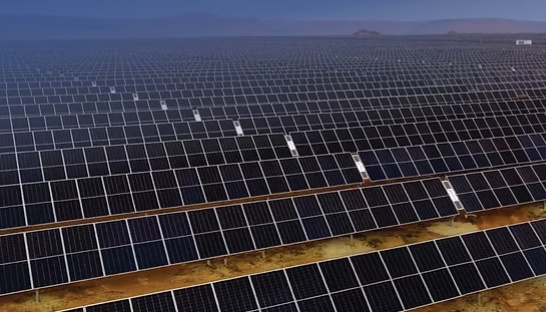
The Dutch independent power producer DSG is a good illustration on the generation side. We run its 350 MW solar and battery portfolio from one environment instead of a legacy platform plus separate systems for monitoring, trading and reporting, which is roughly the electricity of a hundred thousand households.
Another important difference is control. Our model is designed to keep the operator in control rather than requiring it to outsource operational and commercial decision-making. The operator retains control of its operational data and trading activity, and we work with the hardware it already has rather than requiring an expensive rip-and-replace programme.
Where else are you deploying these solutions?
The pattern repeats wherever electrification is moving quickly. Every market we work in is adding cars, heat pumps and home batteries faster than the local network was planned for, and the operator serving those homes ends up needing the same thing, which is one place to see and steer all of it.
Powernaut is headquartered in Ghent and is live in six European markets. On the household side our customers include EDF Luminus and Bolt, and four of the five largest suppliers in Belgium now work with us. On the generation side, DSG in the Netherlands and Romande Energie in Switzerland, where the deployment covers the business portfolio.
The precise electricity-market structures differ from one country to another, but the operational challenge is very similar. Operators are adding renewable generation and batteries, subsidies are declining, portfolios are becoming increasingly exposed to market prices and grid conditions, and those operators need to coordinate assets across multiple markets without adding a new software system every time they add a site or a revenue stream.
That is why we see the Dutch experience as very relevant beyond the Netherlands. The details of the market may change, but the requirement for better visibility, control and coordination is consistent across Europe.
What plans have you got in place to advance these solutions in the years ahead?
Our direction is to make it progressively easier for renewable operators to expand both the physical scope of their portfolios and the number of markets in which those portfolios can participate without creating more operational complexity.
The clearest direction of travel is behind the meter. Every home that adds a car, a battery or a heat pump becomes a small piece of flexibility the system can use, provided somebody can see it, steer it and prove what it delivered. We want an operator to be able to bring another hundred thousand households into the same operating layer, or another solar and battery site, without rebuilding its technology stack to do it.
More broadly, we want operators to be able to connect additional solar, batteries and other flexible assets into the same common operating layer, and then reach additional electricity markets without rebuilding their technology stack each time.
Ultimately, the goal is to help operators decide in real time whether electricity should be generated, stored, consumed or curtailed based on both grid needs and market value, and to execute those decisions reliably across their portfolio.
Anything else you want to say I haven’t mentioned?
The broader point I would make is that the next phase of the energy transition is as much an operational challenge as a construction challenge.
Europe absolutely needs more renewable generation and more grid infrastructure. But simply adding assets does not automatically create a flexible electricity system. A battery is not automatically “smart” because it has been installed, and a solar plant is not automatically flexible because it can technically be curtailed. The value comes from connecting those physical assets to reliable data, market signals and operational priorities, and then being able to verify what actually happened.
That is why I think software is increasingly becoming part of energy infrastructure itself. If an asset responds to a grid signal, that action should flow automatically into trading, settlement and reporting. Operators should not have to reconcile four disconnected systems afterwards to work out what happened and whether it made or lost money.
The first phase of Europe’s transition proved we can build renewable capacity at scale. The next phase decides whether we can actually use it, and a good deal of the answer is now sitting in ordinary driveways and utility rooms rather than in the places we are used to looking.
For additional information: