

Thanks to innovative technology, the plant has increased its efficiency to 92 percent and significantly advanced decarbonisation, reducing CO₂ emissions by 25 percent. This landmark initiative paves the way for the establishment of a fully coal-free district heating network by 2030, using biomethane, hydrogen, and other local energy sources.
This is the biggest change in the history of district heating in Poznań, improving air quality, strengthening energy security and ensuring a stable heat supply for the city's residents.
“By leveraging Veolia’s expertise in district heating, we are taking a decisive step in Poland’s energy transition” said Estelle Brachlianoff, CEO of Veolia. “This two-phase project, which we are unveiling, will eliminate more than 300,000 tons of coal per year, ultimately leading to net-zero consumption. For Poznań, this will mean cleaner air, a better quality of life, and a more affordable, reliable, and resilient energy grid.”
The project is a perfect example of effective decarbonisation in district heating networks. Modern gas-fired cogeneration allows for the simultaneous production of heat and electricity, increasing efficiency and significantly reducing emissions. As a result, the new network guarantees stable deliveries and greater flexibility compared to coal-fired units.
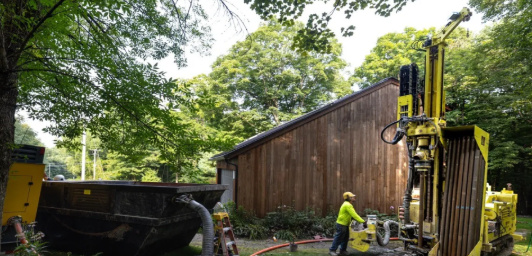
Over the next few years, Veolia will implement Phase 2 with innovative solutions that will further reduce CO₂ emissions and increase the share of recovered and renewable energy, ultimately eliminating coal consumption. The global energy leader will develop solutions that utilise waste heat from industrial production, wastewater, and data centres. The next stage of the project will be the construction of geothermal heating plants, which will provide a stable and renewable energy source and could cover approximately 20 percent of the city's heating needs. By 2030, Poznań's district heating network will therefore be based on a diversified and decentralised energy mix, with coal having been completely phased out.
“The energy transition of more than 500 district heating networks managed by Veolia in Europe is a challenge of considerable magnitude” added Philippe Guitard, CEO of Central and Eastern Europe, Veolia. “It requires local and flexible solutions that make the best use of available resources. Today, we are witnessing a decisive step forward in Poznań. The investment made represents a key milestone in the energy transition of the district heating network in the capital of Greater Poland. It will enable the complete phasing out of coal in the Poznań system by 2030.”
This new unit not only supplies the district heating network but also supports the national electricity grid (KSE) through a capacity contract, thus guaranteeing its availability during periods of high electricity demand. It strengthens energy security and facilitates the integration of renewable energy sources into the national grid by stabilising their fluctuating output. High-efficiency gas-fired combined heat and power (CHP) plants respond more quickly to load fluctuations than coal-fired plants, which is crucial in a system based on an increasing share of renewable energy.
Veolia is also investing in smart district heating network projects currently being implemented, including the digitisation of infrastructure, sensors and remote control systems and AI-based optimisation, which will make it possible to forecast heat and electricity demand, minimise losses, optimise supply temperatures and integrate distributed energy sources in real time.
For additional information: