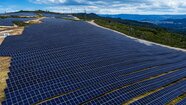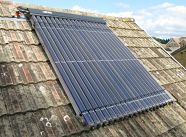

Sharp, one of the world's leading manufacturers of solar cells, has announced the development of a new type of cell able to convert sun light into electricity more efficiently. The technology used for this new development is the transformation of a conventional 2-active-layer cell (made of amorphous silicon and microcrystalline silicon) into a triple-juntion type (using the same materials structured as two layers of amorphous silicon and one layer of microcrystalline silicon), with higher voltage levels and lower light-induced cell degradation. Not only the cells will see their efficiency increased. Module efficiency will be boosted to 10%, meaning that roughly 10 parts out of 100 from the photon energy sent by the Sun will be conversed into electricity and made available to the users as power output.
On top of the increase in efficiency levels, one of the greatest advantages of the new cells is the way in which Sharp has been able to use a three-layer structure without any need of increasing production equipment, which will lead to an eventual drop in the price per watt, as expensive additional equipment will not be necessary. The decrease in price per watt has been estimated to be around 10% with respect to the former model.
In addition, if the new cells are used in Sharp's Lumiwall Illuminating Solar Panels, which feature a combination of solar module and light emitting diods (LEDs,) or in transparent thin-film solar modules designed for use as architectural elements, the new technology can produce an even higher power output. Sharp has announced that mass production of the new cells will start, at the company's Katsuragi Plant in Nara, during May 2007. At the moment, Sharp's solar PV output capacity is around 600 MW per year, although the company has already announced a plan to increase it to 710 MW per year from March 2007.
For additional information: www.sharp.com.