

This is enough power to make over 732 billion cups of tea or keep around 4.6 million typical three-bed semi-detached homes warm using a heat pump for a year. The 30 percent rise in generation follows the UK solar sector smashing several other records this year.
A total of 14,067 GWh came from solar energy in 2024, according to NESO.
The sector is already making a significant contribution to reducing the cost of electricity from the grid. With further growth and reform to the electricity market, this will be more apparent over the coming years.
Solar energy’s growth contributed to Great Britain’s electricity supplies having their second lowest carbon intensity ever this year, averaging only 126 grams of CO2 per kilowatt-hour, down from 444g/CO2 in 2009.
The massive jump was largely, though not exclusively, due to an 18 percent surge in capacity over the year, going from about 20.2 gigawatts to around 23.8 GW by the end of the year, according to estimates from Solar Media. Around 650 MW is expected at the smaller scale (largely on residential rooftops), 450 MW on the roofs of commercial buildings and 2.5GW on the ground as solar farms.
The record-breaking weather this year also played a significant role. As of Monday, the UK recorded 1,622 hours of sunshine over the year, more than any year since Met Office records began in 1910. Scotland saw its second sunniest year, Wales its sixth, while Northern Ireland was well above the long-term average.
The previous UK record had stood since 2003. March and April were the sunniest, while May was the second sunniest, seeing 653 hours of sunshine in all – 43 percent above average. The summer was also bright, with 556 hours of sunshine over June, July and August, or 10 percent above the long-term average. Southern and eastern England, where solar farms are more concentrated, were particularly sunny.
In contrast, the pattern of sunny and dry weather broke in the Autumn, though September still had slightly above-average hours of sunshine.
“Solar is one of the cheapest forms of power – getting us off fossil fuels and delivering energy security so we can get bills down for good” said Energy Minister Michael Shanks. “The sunniest year on record highlights the huge opportunity we have to make the most of this clean energy source and keep installing more solar panels on schools, hospitals and homes. As we move into 2026, we will scale up the solar power we need to shield households from volatile fossil fuel markets and tackle the climate crisis.”
2025 broke many records, reflecting how solar energy has become the cheapest source of power for the UK.
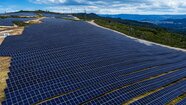
Earlier in the year, Cleve Hill solar farm in northern Kent came online. At 373 MW, it is by far the largest of its kind in the UK. The next greatest is Llanwern near Newport, at 75 MW.
The number of smaller-scale solar rooftop installations smashed the annual record of 203,125 that had stood since 2011. Almost 250,000 have been reported to standards body MCS, with data still coming in. Much of the increase can be attributed to the newbuild market, with new homes often coming with solar panels pre-installed. The forthcoming Future Homes Standard and Future Buildings standard will make this all but mandatory for new construction.
March and October had the fifth and sixth most installations recorded by MCS since the scheme began in 2009.
A new record for the most instantaneous solar power generated was set at 12.30pm on 8 July, reaching just over 14 GW, 43 percent of demand. The previous record of 13.8 GW had been set on 6 April.
Meanwhile, the sector has continued to innovate. Associated British Ports will deploy 40 MW at the Port of Barrow, after Westmorland & Furness Council approved the project in November. In conjunction with Solar Energy UK members, Peel Ports is working on the largest rooftop installation, at the Port of Liverpool. A total of 31 MW will be deployed there next year, five times more than the current record holder at the Port of Hull.
“The solar sector has long passed being a bit-player in the UK energy market” added Chris Hewett, Chief Executive of Solar Energy UK. “It is now supplying six times more hydropower, more than half of the output from nuclear and a quarter of the power generated from natural gas. With capacity set to rise to almost 60GW over the coming decade, we are guaranteed to see records tumble each year, putting the nation on course for cheaper, cleaner power.”
For additional information: