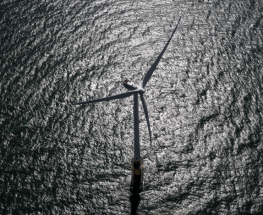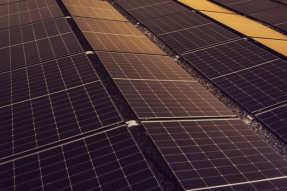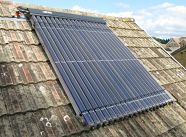

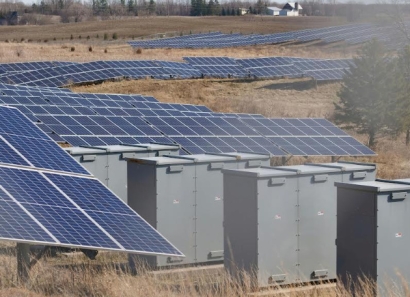
The UK Government’s Clean Power 2030 Action Plan, introduced in December 2024, looks to ensure that clean sources produce “at least as much power as Great Britain consumes in total” and “at least 95% of Great Britain’s generation.” Achieving this will rely on a blend of offshore wind and solar energy deployed at scale.
But this transformation hinges on flexibility. As wind and solar dominate, BESS is becoming the backbone of grid stability, absorbing excess renewable energy and releasing it during demand peaks. Lithium-ion technology leads the way here, comprising 95% of UK BESS projects, thanks to its rapid response and scalability.
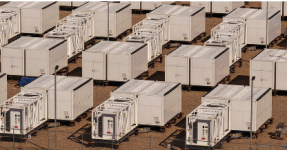
Higher renewable penetration has driven demand for energy storage. As of September 2025, RenewableUK reports 1,943 active battery storage projects in the UK, with 6.8 gigawatts (GW) of operational capacity — a 509% increase since 2020.
Even larger projects are underway. Tillbridge Solar in Lincolnshire will deliver 1.5 GW of solar PV and three GWh of BESS, while Pembroke Battery in Wales will become the UK’s largest storage facility when construction begins in early 2026.
These assets will provide fast frequency response, peak shaving and renewable firming. Their success, however, depends on safe, reliable integration into medium-voltage (MV) grids. Systems typically connect at 6–36 kV, where grid code compliance, fault studies and earthing design are critical. Without robust protection, the promise of storage could falter under grid physics.
MV grids are fault‑energy rich environments. In solidly earthed MV systems, a single‑line‑to‑ground fault can drive very high currents, imposing severe thermal and mechanical stress on step‑up transformers, converter valves and switchgear.
For BESS, rapid dispatch and high-power flows amplify risks such as inrush currents, transient overvoltages and earth faults escalating in milliseconds, posing compliance and protection challenges under the GB Grid Code. Without controlled earthing, fault magnitudes can exceed clearing times and equipment limits, risking outages and costly repairs.
As grids add high voltage direct current (HVDC) links to ferry offshore wind and remote solar, and as BESS ties into converter stations or MV collectors, abnormal conditions like DC faults reflected into AC neutrals demand predictable neutral behaviour. Limiting ground fault current is essential to maintain converter transformer integrity and prevent cascading trips.
Making BESS safe
This is where neutral earthing resistors (NERs) do the quiet, but crucial work. By inserting a defined resistance between the transformer neutral and earth, an NER limits earth fault current to a level that protection relays can detect and clear selectively, without tripping the entire plant.
NERs prevent transformer insulation damage, reduce arc flash hazards, minimise voltage stress on equipment, enable controlled fault detection and isolation and maintain system stability during fault conditions. Cressall supplies NERs tailored for MV and HV duty in renewables and storage, with engineering guidance that highlights how DC and AC NERs protect converter transformers and maintain system integrity during abnormal events — requirements that map directly to MV‑connected BESS.
Every Cressall NER is designed to IEC and IEEE standards, factory tested under fault current conditions and built with stainless steel elements for outdoor durability. They are rated for continuous operation in harsh environments, ensuring reliability in demanding renewable installations.
In practice, this means fewer catastrophic stresses on transformer windings and converter components, better adherence to grid code protection settings and smoother interconnection approvals.
The UK is reshaping its energy system, but success depends on more than megawatt-hours. Behind every project is a layer of protection technology that keeps the grid stable. As the UK races toward Clean Power 2030, NERs are foundational, turning unpredictable faults into manageable events, making MV-connected BESS bankable and resilient.