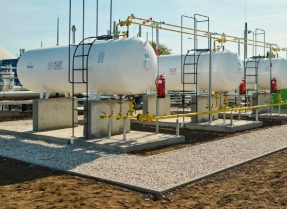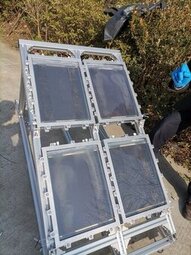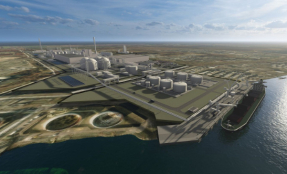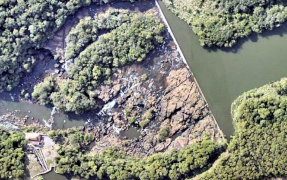

The milestone facility, a 3–5-hectare FOAK desert installation, will mark HutanBio's transition from pilot to commercial deployment, producing net-negative bio-oil at costs in line with used cooking oil market prices.
Set to break ground in Q2 2026, this first-of-its-kind site will demonstrate HutanBio's energy platform at commercial scale and serve as a template for rapid replication across coastal desert regions worldwide.
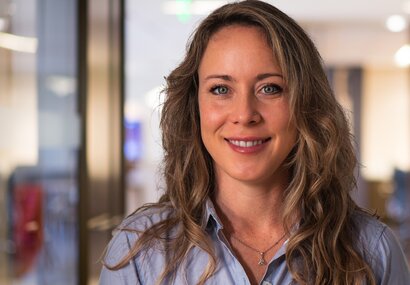
“We're moving from validation to deployment” said Ms Hook, who was formerly the company's Business Development Director. "Our technology is proven, partnerships are advancing, and the market is ready. My focus is securing commercial agreements that deliver immediate carbon savings while laying the foundation for rapid global scale-up."
Ms Hook brings 13 years of experience in the energy transition, combining chemical engineering expertise with technical sales and project management across the downstream energy sector. Since joining HutanBio, she has played a pivotal role in developing strategic partnerships and establishing the commercial framework for market entry.
Recently, an independent ISO-compliant life cycle assessment confirmed that HutanBio's HBx microalgal biofuel achieves net-negative carbon emissions during production - meaning it removes more CO2 than it emits. This validation positions HutanBio as a practical, commercially viable, sustainable fuel solution for shipping, aviation, and heavy transport operators facing urgent decarbonization mandates.
HutanBio's model - high-yield biofuel production on desert land using seawater - provides a pathway to expanding clean energy supply without competing for food or freshwater resources. By pairing scalable economics with a net-negative carbon footprint, the company is emerging as a next-generation fuel provider for hard-to-abate industries.
A single square kilometer of cultivation can produce around 4,500 tonnes of bio-oil annually while removing 25,000 tonnes of CO₂ from the atmosphere.
This appointment also addresses a critical industry challenge: taking breakthrough clean technologies from the lab to global deployment. With the biofuels market projected to nearly double to $200 billion by 2030, HutanBio is uniquely positioned to scale capacity while avoiding the constraints facing may other biofuel technologies (water use, agricultural land, or food-based feedstocks).
For additional information: