
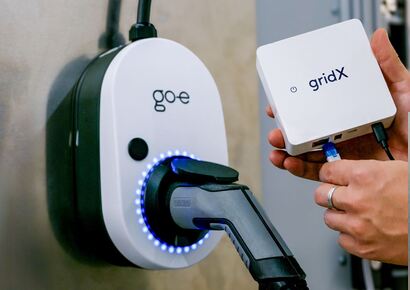
The gridBox allows both import and export for residential use and import for commercial electrical vehicle (EV) charging, empowering homeowners and CPOs to save money, use a variety of asset manufacturers (OEMs) and comply with strict grid requirements.
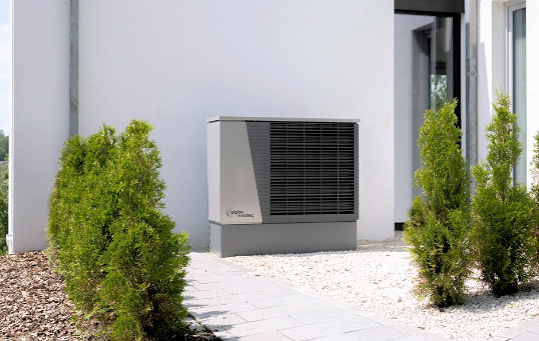
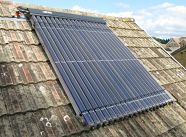
A smart home energy management system (HEMS) connects PV systems, home batteries, heat pumps, wallboxes and smart meters from different Original Equipment Manufacturers (OEMs) into a single, interoperable system and intelligently manages a household’s generation, storage and consumption
G100 is an engineering standard set by the Energy Networks Association that sets limitations on how much electricity photovoltaic (PV) systems, EVs and other distributed energy resources may export from or import into the UK’s low-voltage grid to ensure its stability. gridX’s G100-compliant HEMS allows households to increase their self-consumption rate and lower costs by optimising their electricity usage based on dynamic tariffs, while also adhering to import and export limitations.
G100 compliance is also the basis for a household to actively participate in energy flexibility services, which enable the aggregation of residential flexibility for trading. Such programmes allow households and energy retailers to earn money, but they must operate within the limitations set by G100.
G100-compliant energy management is also crucial at charging stations for EVs. Unlike in the residential sector, the gridBox is currently only approved for G100-compliant grid import and thus unidirectional charging.
gridX’s energy management system (EMS) allows CPOs to dynamically manage loads and thus install more charge points on existing infrastructure, automatically charge EVs during low price periods and shave demand peaks to minimise grid fees. The solution also enables the integration of storage and PV systems so that consumption can exceed physical grid constraints.
On top of these use cases, G100 compliance allows CPOs to minimise their operating costs, while guaranteeing that EV chargers never exceed the G100 cap.
To be able to offer additional forms of flexibility and bidirectional charging in the future, gridX is also working on obtaining an export permit for the gateway.
The introduction of G100 has meant British installers now bear greater regulatory responsibility and are subject to stricter documentation and compliance requirements.
A G100-compliant (H)EMS helps installers reduce this complexity by lowering planning effort and standardising processes, while also reducing their liability risk by ensuring compliance with import and export limits. It also means installers and homeowners are free to choose multiple devices from an array of OEMs – and retrofit existing energy assets with new ones – with the peace of mind that they will remain compliant even with larger loads.
According to gridX calculations, at the end of 2025 the UK had around 3.2 million homes with at least one energy asset that would be suitable for retrofitting, opening up a large revenue pool for installers and energy providers who install compliant hardware.
A G100-compliant EMS at charging parks enables faster infrastructure scaling, by expediting approval processes, streamlining documentation and billing services, and ensuring grid operators’ requirements are automatically met.
“Removing complexity is the key to a successful energy transition” said Marcel Müller, Vice President of Technology. “Meanwhile, more and more regulatory requirements like G100 are introduced in the energy and e-mobility sectors. The rollout of our agile energy management system in the UK, which not only ensures compliance of multiple asset types from various OEMs but also enables additional flexibility value streams to unlock new revenue streams, brings us another step closer to our goal of establishing gridX as Europe’s leading platform for connectivity and flexibility of decentralised energy resources.”
For additional information: