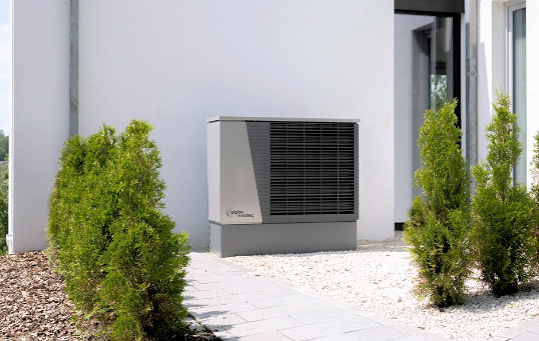

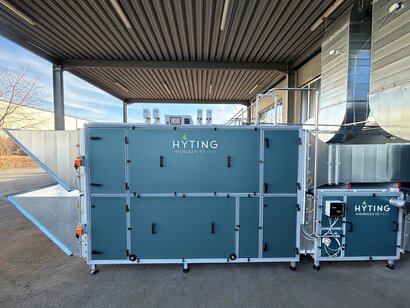
Hyting has developed an innovative heating technology that uses the process of catalytic hydrogen oxidation to generate heat directly without a flame, allowing for emission-free and highly efficient building heating. By maintaining fuel concentration levels below 3 percent, the technology guarantees process safety without the need for rigorous explosion protection measures.
“Our mission is to decarbonise heat using hydrogen in a way that is simple, safe, efficient, and clean” said Tim Hannig, CEO of Hyting. “Through our solutions, we help companies significantly reduce their carbon footprint by offering emission-free heat for buildings and industrial processes up to 300 °C that can be seamlessly integrated with other sustainable technologies”
Maximum energy efficiency can be achieved by combining Hyting systems with heat pumps. Using hydrogen heaters to cover peak heat demand avoids costly oversizing of electrical installations and significantly reduces contracted capacity charges. By using heated air directly, without heat exchangers, the system generates 37.4 kWh of thermal energy from 1 kg of hydrogen, making it one of the most efficient hydrogen solutions currently available in the heating industry.
The use of flameless oxidation allows for the complete elimination of carbon dioxide, nitrogen oxides, and particulate matter emissions, with water being the only byproduct. For customers, this technology means real progress toward ESG goals and a reduction in operational and investment costs by 20–30 percent compared to alternative emission-free solutions.
“Introducing Hyting technology into our portfolio is a strategic step in the development of our new Kabar H2 business line” added Piotr Miodek, Vice President of Kabar Group. “We are offering the market a new solution that not only supports ambitious climate goals but, above all, is economically justified.”
As a result of the signed agreement, Kabar will be responsible for the sale, distribution, installation, and servicing of Hyting devices in Poland. They will primarily be used for heating logistics halls, production facilities, and large-scale commercial buildings.
For additional information: