
The report was authored by Robert Rapier, a globally recognised oil and gas expert with a reputation for rigorous analysis of fuel production systems. He determined that Syntholene's thermally integrated electrolysis platform is engineered to deliver unsubsidised hydrogen production costs in the range of $1.50 to $2 per kilogram under favourable conditions.
Hydrogen is the dominant cost in synthetic aviation fuel production and generating it at low cost is central to achieving cost competitive synthetic fuel. Current unsubsidised estimates of analogous green hydrogen prices include $6.69 per kilogram in Europe and $6.90 per kilogram in North America.
“Syntholene offers a credible path to low-cost, zero-carbon hydrogen and synthetic aviation fuel, with the potential to become a cornerstone of industrial decarbonisation and clean fuel production” said Mr Rapier. “Some of the projects I see are alchemy. Syntholene's is not. It's technically viable. It's now a matter of testing and proving, and the remaining challenges have been identified and can be solved.”
Robert Rapier has led and reviewed projects across the major alternative fuel pathways, including gas-to-liquids (GTL), vegetable-oil-to-diesel, and biomass-to-liquids via Fischer-Tropsch (FT). After receiving degrees in chemistry, mathematics, and chemical engineering, he worked at ConocoPhillips on hydrogen production and FT upgrading challenges. He was later recruited to serve as editor-in-chief of Shale Magazine and has covered the energy sector for Forbes for over a decade.
The report evaluates the technical, economic and operational viability of Syntholene's process and is intended to support investor diligence and reinforce the commercial feasibility of its technology.
It confirms that by substituting heat for a portion of its electricity demand, Syntholene's system can operate using less than 37 kilowatt-hours per kilogram of hydrogen (kWh/kg H₂). The process has the potential to produce hydrogen and synthetic aviation fuel at a cost competitive with fossil-derived aviation fuel.
The report also confirms that key materials required for Syntholene process, including ceramic electrolytes, nickel catalysts, and stainless-steel interconnects, are less constrained compared to those used in conventional PEM electrolysers, giving Sytholene a potential advantage in long-term scalability, cost stability and resilience to geopolitical supply risks.
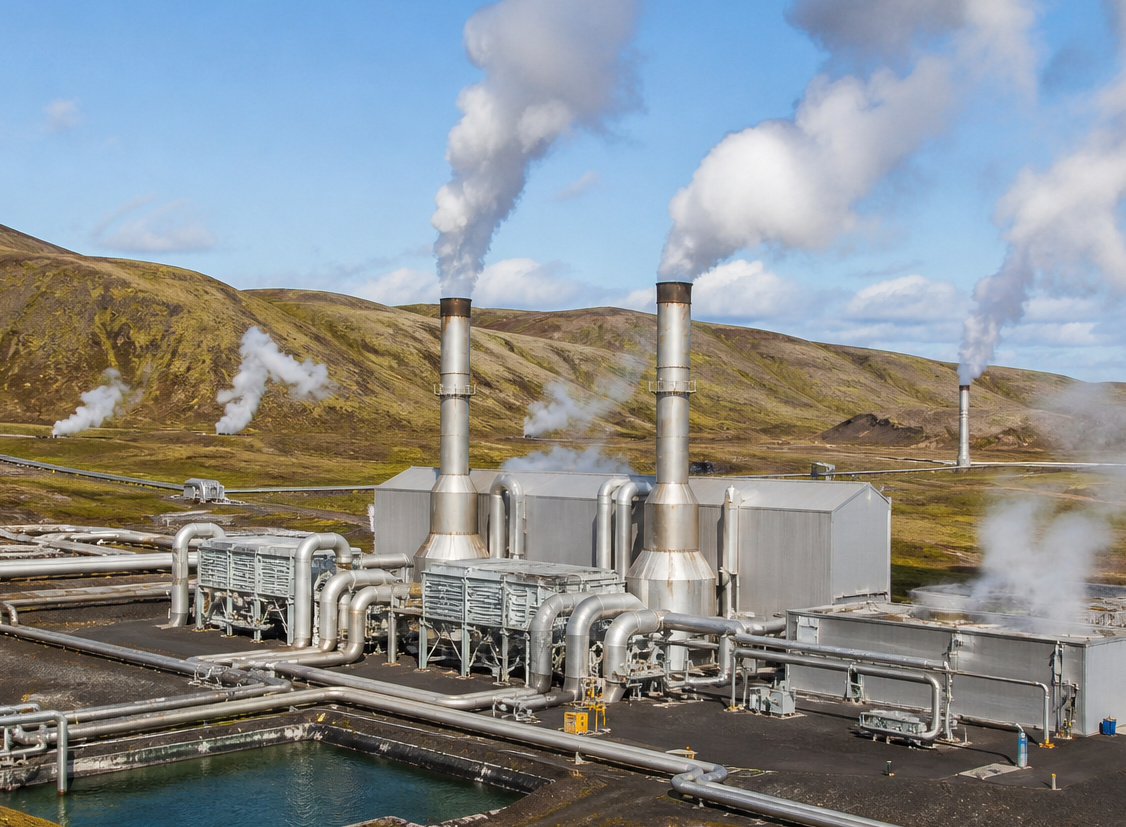
Notably, the report identified the remaining scaling and development challenges as engineering and integration problems with defined solutions, rather than scientific unknowns. The report evaluates challenges such as securing competitive long term energy offtakes, sourcing carbon, and construction risks as non-trivial, but tractable. These and other construction, economic, regulatory, and market risks remain inherent in the scaling of fuel production infrastructure. According to the report, these risks are manageable through disciplined project management of a staged and modular development strategy. The report also underscores the importance of the demonstration facility Syntholene is currently building in Iceland, which is intended to validate system performance under real-world conditions using base-load geothermal power and heat integration.
Syntholene remains optimistic that the projected efficiency gains from its proprietary Thermal Hybrid Production System are aligned with growing global demand for fuels decoupled from fossil and biological crude feedstocks. Its development roadmap emphasises staged validation, third-party testing, and strategic partnerships as mechanisms designed to de-risk execution and support future commercial scale-up.
For additional information: