
Injecting up to 1,000 megawatts (MW) of reliable, secure, and clean power directly into one of the world’s most densely populated megacities, the new HVDC link delivers a step-change in Mumbai’s energy resilience. The Kudus-Aarey connection significantly strengthens the city’s transmission infrastructure, supporting the daily needs of more than 20 million people.
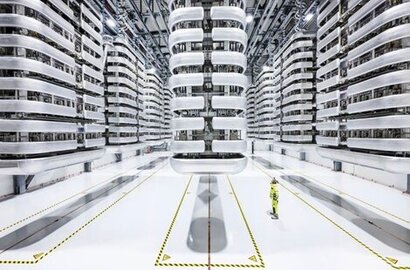
Powered by Hitachi Energy’s Voltage Source Converter (VSC) HVDC technology, the link delivers precise, fast control of power flow, improved voltage stability, and enhanced grid reliability in a city where space is scarce. The Aarey converter station upgrade marks the city’s most significant grid modernisation in nearly 25 years, boosting the grid capacity from 250 to 1,000 megawatts (MW) and directly reinforcing the city’s energy stability and resilience thus ensuring energy security.
“The HVDC city centre infeed is a critical enabler of the Mumbai Climate Action Plan, strengthening the city’s ability to integrate renewable energy and build a more resilient, future-ready grid” said Kandarp Patel, CEO, Adani Energy Solutions Ltd. “By expanding access to clean power, this project supports the city’s decarbonisation goals and ensures that homes, businesses, transport systems, and digital infrastructure have the reliable, low-carbon electricity they need to grow.”
Building a major transmission interface within tight urban constraints required precise coordination of construction and logistics, a challenge intensified by Mumbai’s monsoon seasons. The converter station was engineered with an extremely compact footprint and supplied through a configuration combining overhead lines and underground HVDC cables, which freed approximately 2 square kilometres of urban territory - equivalent to approximately 280 football fields or more than 100 cricket fields.
The project is supplied through the Kudus grid connection with power imported from outside the city, including renewable energy from generation regions of Maharashtra and renewable-rich nodes across India’s national grid.
With its compact footprint, ability to transmit power through underground cables in constrained corridors, and inherent advantages in managing power congestion, pollution, acoustical and electrical noise, power quality, and control, the in-city HVDC application provides a scalable model for other Indian cities and global megacities facing similar multiplying power demand as well as land permitting and grid integration challenges.
For additional information: