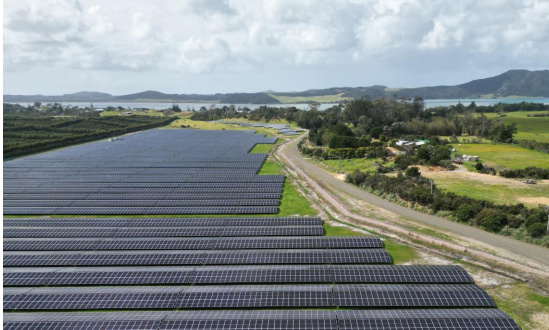


USDA has imposed unlawful anti-solar eligibility criteria on REAP while abruptly changing the rules of the program such that farmers and rural small businesses across the country have been individually stuck with tens of thousands of dollars of unexpected expenses. The lawsuit was filed on behalf of farmers, solar developers and installers, grant writers and organizations representing these interests.
REAP was created in 2002 to help farmers and rural small businesses invest in renewable energy, including solar.
“Congress created REAP to help farmers put solar on their own land and cut their own energy costs. USDA now wants to dismantle a successful bipartisan program and slam the door on farmers who already spent significant sums of money relying on USDA’s own rules,” said Jessica O’Donnell, Senior Attorney, Environmental Law & Policy Center. “USDA cannot change the rules of the game mid-stream after farmers have relied on those rules in good faith, and we are going to court to hold them to it.”
REAP is a highly successful, bipartisan program. Between 2023 and 2025, REAP funds supported 6,822 projects and drove an estimated $2.75 billion in rural economic development. In a 2025 report, USDA acknowledged that REAP projects had generated or saved enough energy to power more than 300,000 homes in 2024 alone. According to USDA data, 68 percent of REAP grant and loan guarantee awards went to solar projects between 2011 and the first quarter of 2025.
USDA’s new policy essentially cuts solar out of a program that Congress expressly designed to promote solar. As a result, cash strapped rural communities will now be denied the benefits of additional cheap, reliable, and environmentally beneficial solar power at the same time that energy prices continue to skyrocket, reaching historical highs.
“USDA doesn’t get to encourage farmers to invest in renewable energy under one set of rules, let them spend their own money relying on those rules, and then rewrite those rules once they’ve already invested. Fortunately, the law does not allow agencies to change course this abruptly, without notice or a real explanation,” said Michael Youhana, Attorney for Earthjustice.
USDA has retroactively applied its new anti-solar policy to applications that had already been prepared and submitted under USDA’s prior rules. Farmers and rural small businesses across the country spent months preparing REAP applications and laid out tens or hundreds of thousands of their own dollars on equipment, engineering, and other costs that qualified for reimbursement under the rules in place at the time. Rather than being reimbursed for these efforts as they had anticipated under the prior rules, many of these applicants are now ineligible for reimbursements due to USDA’s abrupt and retroactive policy change.
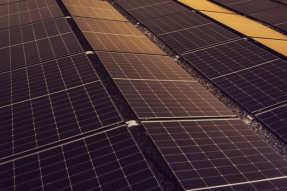
Book Family Farms in Dixon, Illinois, for example, had been notified that two of their projects, solar arrays totaling 429 kilowatts, had been selected for $446,000 in funding in late 2023 and early 2024, and the family immediately began working on those projects. Then—more than two years later—on March 31, 2026, USDA announced it would retroactively apply its anti-solar policy to the farms’ applications, therefore cancelling their approved $446,000 of funding.
Specifically, the lawsuit asks the court to:
Earthjustice represents the Illinois-based Book Farms, the New York Solar Energy Industries Association, Minnesota-based solar developer Wolf River Electric, and two New Mexico based renewable energy consultancies, Clean Power Consultants and David Loney Consulting.
ELPC represents the Iowa Farmers Union, the Iowa Solar Energy Trade Association, RENEW Wisconsin, and Solar United Neighbors (SUN).