
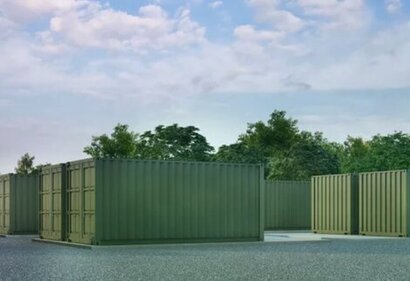
Located in Leicestershire, Blaby District Council granted Innova planning consent in May 2025, following which the project was confirmed as eligible for the first long-duration energy storage cap and floor scheme application. A decision on its application is expected by the regulator in summer 2026. A final investment decision on the project is expected in 2027 with operations commencing in 2029. Once built and operational the Enderby BESS project is expected to deliver up to 1,025MW of capacity making it one of the largest battery storage projects in the UK.
“The acquisition of the Enderby battery storage project marks another major milestone in the expansion of our UK portfolio and demonstrates our ambition to deliver large-scale battery storage infrastructure at pace to support the UK Government’s Clean Power 2030 Action Plan” said Morris Van Looy, Chief Growth & Strategy Officer of Fidra Energy. “We are delighted to be working with Innova, leveraging their experience of working successfully with local stakeholders and communities to develop, build and operate an exciting project that will help to strengthen the resilience of the UK’s electricity system.”
The acquisition of Enderby increases Fidra Energy’s total UK BESS pipeline to over 4 GW. Building on its successful capital raise in 2025, construction is already underway on its site at Thorpe Marsh, Yorkshire, (1.4 GW/3.1 GWh) and a final investment decision will be made on its site at West Burton, Nottinghamshire (500 MW/1.1 GWh) in June 2026. Both projects are expected to be fully operational by 2028.
“We are delighted to have completed the sale of the Enderby project to Fidra, our third utility scale transmission connected battery storage project in the last 12 months, which together when built will amount to over 2.4 GW of new capacity, making a major contribution to the UK ‘s clean energy targets” added Daniel Mushin, Chief Finance & Investment Officer of Innova. “Fidra has been an excellent counterparty during this transaction, and we look forward to continuing to work with them.
Battery energy storage plays a critical role in the UK’s energy transition by enabling greater integration of renewable generation into the grid, reducing curtailment and enhancing system flexibility and resilience. The UK Government’s Clean Power 2030 Action Plan envisages between 22 and 27 GW of short-duration battery storage will be operational by 2030.
For additional information: