
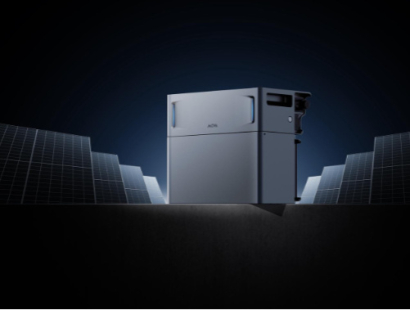
At Intersolar Europe / ees Europe 2026, the S4800 from MOVA LumeGret separates the inverter and battery intoindependently transportable modules: the inverter at 14.8 kg, the battery pack at 28.3 kg. A single technician with a hand truck replaces the crane and the scheduling complexity that goes with it. After years of all-in-one cabinets built for detached houses with rooftop solar, the shift to apartments, balcony installations, and retrofit properties where stairs, weight limits, and tenant permissions matter as much as kilowatt-hours has found a form factor to match.
The shift has been building for several years. Tightening net metering policies, volatile electricity prices, and a housing stock across Northern Europe where apartments represent the majority of urban dwellings in major cities have driven demand outward from the traditional rooftop segment. For the basic S4800 configuration, no wall drilling or dedicated distribution box is required, though grid-tied installations in some jurisdictions still fall under electrician oversight. Setup is rated at approximately 30 minutes across five main steps, a figure the company says is consistently among the aspects European users cite first in post-installation feedback.
Photovoltaic input reaches 4,800 W, enough to support eight to ten 450 W panels on a typical balcony or small roof array. Peak MPPT efficiency is rated at 99.8 percent. Base battery configurations start at 3 kWh or 5 kWh, scaling to 15 kWh or 25 kWh through stackable expansion modules. Grid-tied AC output spans 800 W to 3,000 W; off-grid capacity reaches 3,600 W. AC charging is rated at 3,000 W, allowing the battery to refill from grid power during overnight low-tariff periods and extending economic viability into winter months when solar generation drops. The EV charging port supports up to 6.6 kW and can add roughly 40 to 55 km of driving range per charge under optimal solar conditions, sufficient to cover weekday transport demand for households with daily commutes under 50 km, largely from local generation. IP65 enclosure protection supports outdoor installation on balconies and in gardens.
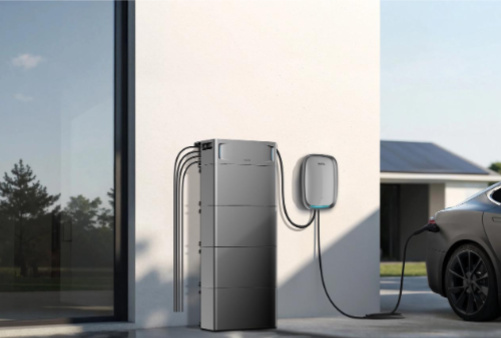
The intelligence layer does as much economic work as the hardware. LumeGret Orbit pulls dynamic pricing data from more than 860 energy providers across major European markets, according to MOVA LumeGret, to optimize charge and discharge schedules against real-time tariffs. Discharge concentrates in peak-price windows; charging prioritizes low-cost periods. Stored solar energy is increasingly treated as a dispatchable resource rather than a passive backup sitting behind a breaker panel, and the difference in financial return between managed discharge and unmanaged export grows as feed-in rates compress. FluxCharge modulates EV charging power based on live solar generation to maximize self-consumption. When cloud cover drops PV output, charging scales down automatically; when generation peaks, it ramps up to capture surplus before export at unfavorable rates. Shelly-based smart meter integrations are supported, with additional ecosystem expansion planned according to market demand. Integration with existing home automation infrastructure allows homeowners to add storage without replacing their entire monitoring stack.
The S4800 sits between the A4000, which targets whole-home storage, and the A2000, a safety-oriented balcony system. The A4000 scales to 20 kWh for households with high consumption or rooftop arrays. The A2000 is built for compact balcony rail mounting with safety certifications for apartment building approval. The S4800 adds EV charging and dynamic pricing intelligence to bridge both use cases, giving installers a single platform to cover apartments, suburban homes, and EV-ready households in one product conversation.
"We believe future residential energy systems will be judged not only by how much energy they can store, but by how intelligently they can manage and utilize energy across the entire home," said Roger Shen, President of MOVA LumeGret. "The S4800 is designed to give channel partners a wider range of customer applications and greater long-term value from a single installation."

Certification covering European safety, EMC, battery, and grid standards has been completed for Germany, France, and the Netherlands, clearing the path for market entry. A regional headquarters in the Netherlands, backed by local warehousing and customer support capabilities, underpins the rollout. Volume production begins by the end of June, with commercial availability targeted for Q4 2026. Current sales run through e-commerce and installer networks; expansion into major home improvement retail channels including OBI and Bauhaus is planned for the second half of 2026. Shelf presence in DIY retail marks a shift from online early adopters to mainstream consumers who evaluate physical products before a four-figure purchase, and places the brand alongside established names in the installer supply chain. Local stock and service infrastructure also shorten delivery lead times and warranty response cycles, factors that influence installer loyalty in a market where after-sales support is increasingly competitive.
As residential storage expands beyond detached solar homes and into apartments, retrofit properties, and EV-enabled households, system architecture is becoming an increasingly important differentiator. The S4800 will make its public debut at Booth C1.556.