

The US and Europe are committed to very different energy strategies. However, the success and failure of both may be uniquely aligned on successfully repowering legacy wind operations expected to reach end of life by 2030.
Europe's goal of achieving 435 GW of wind power by 2030 will hinge on significantly expanding its existing onshore capacity, which currently stands at 291 GW. However, almost 30 percent (86 GW) of wind capacity is due to retire by 2030 leaving an insurmountable task for the industry to fill the void with new wind projects.
In the US, the focus is on expanding energy generation capacity (both traditional and renewable) and upgrades to grid networks to support the exponential growth of data centre operations. With industry experts predicting delivery delays to new traditional (gas-fired) energy plants - up to 20 percent of new data centres could face significant delays. Losing 41 GW of legacy wind power (wind capacity set to reach end of life by 2030) and failing to potentially double this capacity would represent a significant missed opportunity.
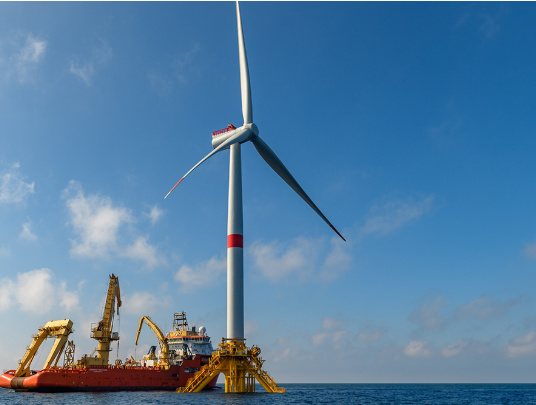
Repowering, compared to installing new wind projects, requires considerably less time to develop due to the reduced planning requirements and existing grid connection. It also requires less funding as costs are between 50-80 percent less than establishing a new wind farm. Wind operators have also cited enhanced yield, doubled or even tripled that of legacy sites, as the key incentive to repowering legacy sites.
The report notes that the viability of repowering is affected by various factors ranging from disparate regulatory landscapes to tax credit incentives. In the US, project economics are driven by federal tax incentives like Production Tax Credit (PTC) & Investment Tax Credit (ITC). Despite their benefits in improving operational efficiency, project owners lack clarity on complex eligibility requirements which often require third-party consultants. This results in delays and hinders the pace of the repowering process.
Conversely, in most European markets, where direct tax incentives are limited or even non-existent, the primary driver for repowering is the ability to avoid lengthy permitting / approval for new projects, as well lengthy wait times for new grid connections, which can take up to nine years in some cases.
While modern turbines deliver extensive benefits and added capacity, they also introduce heightened risks, including the risk of thermal events. Modern turbines comprise advanced technologies such as larger transformers, complex electronics and a compact arrangement of components. Compared to legacy (low power) models, these represent a heightened risk of internal electrical faults and thermal overload.
The financial repercussions of replacing individual turbines damaged by fire can be high, costing up to $11 million with 12-18 months of expected down time while a replacement turbine is secured. Furthermore, it is more financially prudent to install fire suppression systems during a repowering project rather than retrofitting them at a later date. Therefore, installing fire suppressions is not only a safety requirement but also a financial necessity that future-proofs assets against losses and regulatory changes.
However, despite the many benefits and relatively low investment required - fire suppression is often overlooked during the planning and construction phase and not considered a valuable “add-on”.
“Repowering is a crucial target to determine whether the EU can meet its 2030 wind capacity target” said Safiyyah Khan, Vice President of Commercial at Firetrace International. “If the wind industry in Europe is truly committed to its goals, we must take proactive steps to ensure that the progress and local support move in tandem. At Firetrace, we’re dedicated to helping developers hit their ambitious repowering targets without compromising community safety and trust.”
For additional information: