
"This research demonstrates that biofuels are not just an energy solution—they're an economic engine that could transform farming's future," said Maryland farmer Chip Bowling, Vice Chair of USFRA. "New evidence offered by highly respected experts at S&P Global Energy show that biofuels can unlock agriculture’s potential to provide abundant and affordable food, feed and fuel.”
Agriculture at a Crossroads
While farmers are producing more grain on their fields due to rising yields, demand has stagnated, and the value of those grains is now often lower than the cost of producing them. The study documents three converging structural trends contributing to the challenge:
• Maturing Food Demand: Global population growth is decelerating to approximately 0.4% by 2050, while percapita consumption of staple foods has plateaued. For example, global per capita meat consumption growth is slowing from around 2.4% since the late 1990s to 0.7% by 2025 and expected to grow just 0.1% toward 2050, indicating near saturation in many markets.
• Productivity Outpacing Demand: Global crop yields continue to accelerate—world corn yields grew approximately 1.5% annually over the past 20 years—yet traditional markets cannot absorb the surplus.
• Declining Biofuel Demand: Vehicle efficiency improvements, changing driving patterns, and electrification are reducing gasoline demand. At current blend rates (10%), U.S. ethanol demand could fall by nearly 50% to approximately 6.6 billion gallons by 2050.
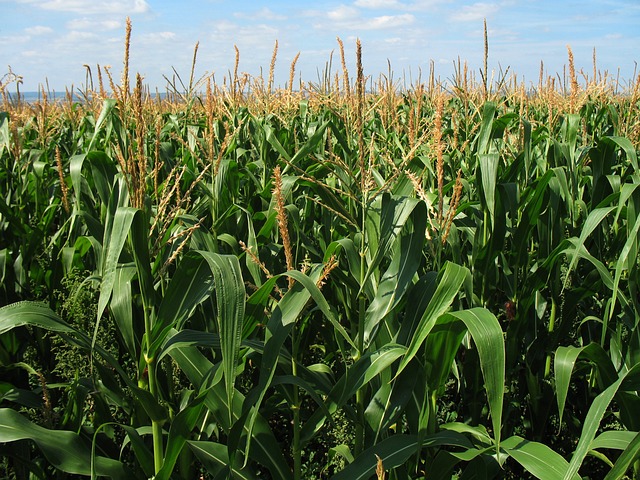
The consequences are stark. Without new sources of demand, at current ethanol blend rates, U.S. corn growers will cultivate roughly 31% fewer acres by 2050—equivalent to halting production on a land mass the size of North Carolina.
A Strategic Opportunity
The research reveals that biofuels represent a uniquely powerful solution. Biofuel markets create sustained, marketdriven demand that rewards farmers for modern practices while revitalizing rural economies.
"The 1980s taught us what happens when farmers have no markets. Biofuels reversed that story—and we can't afford to go back," said Kip Tom, Former U.S. Ambassador to the UN Agencies for Food and Agriculture.
Key Findings: A Path to Prosperity
Under an optimized high-growth scenario, the study projects transformative outcomes:
• Tripled Global Biofuel Production: Driven by agriculture technology and innovation, global feedstock output could triple biofuel production by 2050, expanding renewable fuels to capture a significantly larger share of the approximately 940-billion-gallon global liquid fuel market – including marine and aviation fuels.
• Consumer Benefits: Historical price analysis demonstrates that ethanol frequently trades at a discount to gasoline, and, through its naturally high octane content, functions as a cost-effective blend component that can improve blending economics and lower finished fuel costs
• Accelerated Innovation: When markets strengthen, investment follows. Strong agricultural demand for food and biofuel would drive adoption of yield-enhancing technologies including advanced seeds, precision agriculture, digital farm management, and regenerative practices. U.S. corn yields could grow at approximately 1.6% annually through 2050—enabling nearly 50% more production without expanding acreage.
• Preserved Farmland and Income: Expanded biofuel demand would prevent a sharp decline in crop acreage, stabilizing farm incomes and supporting continued investment in rural communities. Total U.S. corn acres would stabilize at 97.5 million acres in 2050, just 1% below 2025 levels. Expanded economic activity would also support input suppliers (i.e., equipment, seed, crop protection, and fertilizer providers).
• Enhanced Food Security: Biofuel growth would simultaneously increase food and feed supplies by 45% compared to baseline scenarios. More than 50% of total supply growth remains directed toward food and feed uses.
Global Implications for Food Security
The study emphasizes that agriculture globally depends on sustained demand signals to support investment in productivity. Currently, significant yield gaps exist worldwide—in Africa, for example, it takes five hectares to produce what one hectare yields in the United States.
Robust biofuel demand, particularly in developed regions, can accelerate technology diffusion to emerging markets, closing yield gaps and strengthening food security globally.
"History shows that farmers can scale production, and continued technological innovation allows them to do so more efficiently—producing more with fewer inputs. If demand signals return, we're confident even more technology will be adopted and supply will follow," said Josh Garetson, John Deere Renewable Fuels & Corporate Strategy Director.
Comprehensive Research Methodology
The S&P Global Energy analysis brings together the perspectives and real-world experience of leading stakeholders across the agribusiness and biofuels value chain, including farmers, input and technology providers, grain and oilseed processors, biofuel producers, trade organizations, and academics.
The analysis is underpinned by extensive proprietary data, in-house modeling, and rigorous scenario testing to assess what is feasible in the decades ahead. Expert insights were offered by leaders at Nutrien, BASF, Bayer, POET, John Deere, the National Corn Growers Association, the United Soybean Board, Growth Energy, CoBank and leading academic institutions, among others.
Read the Full Report: www.FuelingAgriculture.com