
Only a month earlier the company announced a close of $180 million in Series B financing led by Nabors Industries and Prelude Ventures, with participation from JERA Co., Inc. and Idemitsu Kosan.
According to a 2025 report from the Clean Air Task Force, “If successfully developed, [superhot rock, or] SHR could supply 63 terawatts of firm, carbon-free power by tapping just 1% of the world’s SHR resources – more than eight times current global electricity generation.”
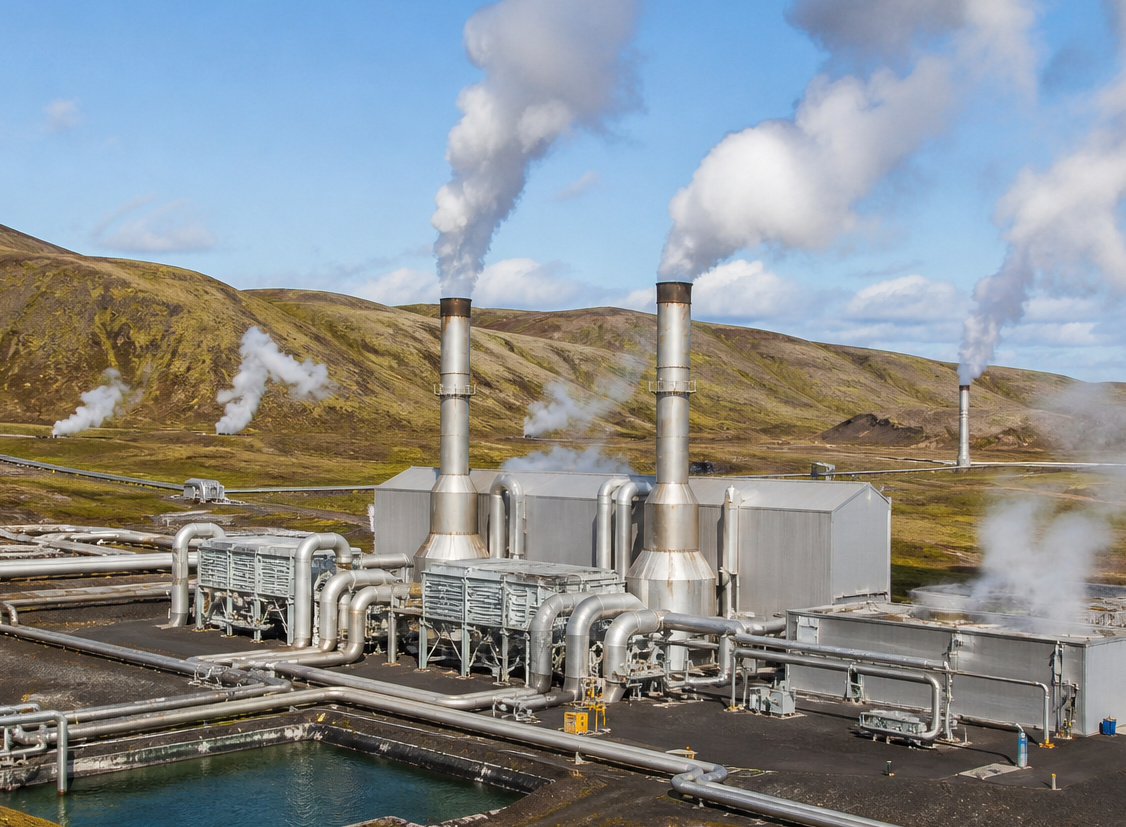
Today, however, rock at those superhot temperatures can be accessed at only a few locations around the globe, such as Iceland, where it is relatively close to the surface. There are power plants under development at those locations, but none are online yet.
The mother lode of geothermal energy is some four to 12 miles beneath the surface. That can’t be accessed today because we can’t drill down far enough. Drills used by the oil and gas industries can’t withstand the formidable temperatures and pressures found that far down. As a result, drilling becomes exponentially more expensive with depth.
Quaise aims to solve the problem with a completely new way to drill using millimeter wave energy (cousins to the microwaves we cook with) that can literally melt and vaporize rock.
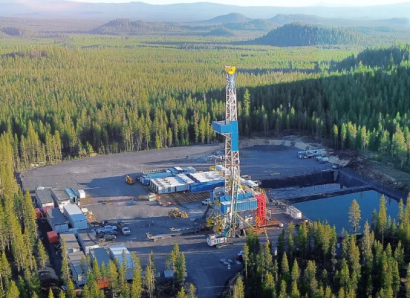
Project Obsidian, currently under construction in Oregon, aims to be the world’s first commercial superhot geothermal power plant.
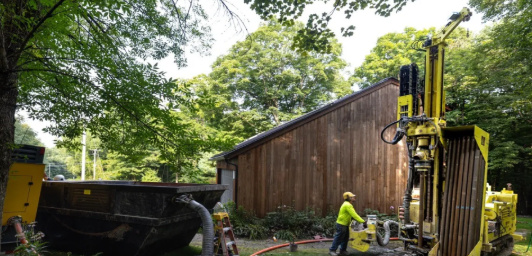
The work is moving quickly. “Beginning in early 2025 we leased the land involved, filed the necessary permits, began surface construction of the site, and assembled our team. This July we began drilling our first confirmation well,” says Dr. Trenton Cladouhos, Vice President of Geothermal Resource Development at Quaise.
That first well will be drilled to a depth of about 15,000 feet—almost three miles—reaching rock as hot as 750 degrees F (about 400 degrees Celsius). It will be used to confirm key variables such as bottom-hole temperature and the geomechanical and physical properties of the superhot rock.
It will also be fitted with sensors to monitor the surrounding conditions, and test a never-before-integrated set of high-temperature technologies key to harnessing the superhot power.
Cladouhos notes that Quaise is also funding concurrent work at Oregon State University (OSU) to recreate in the lab the conditions found miles underground. The goal of the Experimental Deep Geothermal Energy (EDGE) lab, established last year, is to learn ever more about the interaction between superhot rock and the water injected to extract its heat. Data from controlled studies in the lab complement those from the field.
The confirmation well is the first of seven wells to be drilled in Phase One of Project Obsidian, which is expected to generate more than 50 megawatts of electric power to the grid by 2030.
The other six wells will make up two separate geothermal systems (three wells each). One will target rock at temperatures reaching as high as 689 degrees F (365 degrees C) with an average temperature of 315 degrees C. The other will target rock at temperatures as high as 779 degrees F (415 degrees C) with an average temperature of 365 degrees C.
The one targeting an average of 315 degrees C is on the cusp of what is achievable today, so it’s lower technical risk.
“We’ll learn a lot from that first system. Combined with the OSU lab testing, that will reduce the technology risk for the second, higher-temperature system,” says Cladouhos.
For each of the two geothermal systems, water will be pumped down one well to the hot rock. The two production wells on either side of the injector will capture the hot water that results from flowing through the hot rock and bring it to the surface and a waiting power plant.
Cladouhos notes that the seven wells will have a surface footprint of just 20 acres while covering a subsurface area of 200 acres. That underscores a key advantage of geothermal energy compared to other sources of renewable energy. According to the University of Texas at Austin, geothermal systems use less than 3% of the land required for similar solar- and wind-energy sites.
Two Quaise employees received awards at GRC 2026. Cladouhos was honored with the Geothermal Pioneer Award, which “recognizes an outstanding achievement and contributions to the development of geothermal resources [that have] led the way for the rest of us.”
Daniel Dichter, a senior mechanical engineer at Quaise, won the Young Professional (Technical) Award, which “recognizes young innovators and researchers, under the age of 35, whose applied research contributions have helped advance knowledge and innovation in the geothermal industry or geothermal community.”
Carlos Araque, CEO and President of Quaise, is proud of his team and what it has accomplished in the eight years since the company was founded. “Our ambition has always been to make superhot geothermal a backbone of the modern energy system, offering affordable, zero-carbon power and true energy independence for communities and nations everywhere," he says. "Project Obsidian is where we first deliver on that promise.”
By Elizabeth A. Thomson, Correspondent