

The Hydrogen Energy Association (HEA), which represents organisations across the entire hydrogen value chain, says hydrogen has an important role to play in delivering the Government's ambitions for industrial renewal, energy security and resilience, while helping to decarbonise some of the UK's most energy-intensive industries.
From supporting industrial clusters in Teesside, the Humber and the North West to creating opportunities for British manufacturers, engineering firms and infrastructure providers, the development of a commercially successful hydrogen economy could stimulate investment and skilled employment across the country's industrial heartlands.
Hydrogen could also contribute to a more flexible and resilient energy system, providing long-duration energy storage and helping to balance renewable electricity generation with industrial demand. The HEA believes these whole-system benefits must be properly recognised when assessing the long-term economic value of hydrogen infrastructure.
Following discussions with ministers, officials and hydrogen developers, the Association has welcomed the Autumn Budget's confirmation of funding for the first Hydrogen Allocation Round (HAR1), plans to progress the second round (HAR2) and the potential availability of up to £300 million in Government-backed loans and equity investment for strategically important projects.
However, uncertainty remains around future funding, hydrogen transport and storage infrastructure and the timetable for subsequent allocation rounds.
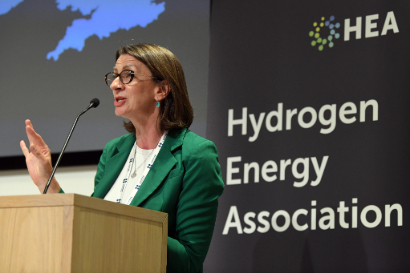
“Hydrogen is about far more than decarbonisation” said Dr Emma Guthrie, Chief Executive of the Hydrogen Energy Association. “It is an opportunity to support the reindustrialisation of Britain, bring investment into our regions, create skilled jobs and strengthen our long-term energy security. The UK has the industrial expertise, infrastructure and innovative businesses needed to build a thriving hydrogen economy. We have an opportunity to develop new supply chains, support energy-intensive industries and create a more resilient energy system that makes the most of our domestic renewable resources. We welcome the Government's continued recognition of hydrogen's importance and the positive commitments made in the Budget. But investment decisions depend on confidence, and confidence depends on clarity. Clarity costs nothing, but its absence can be expensive. Providing credible timelines, transparent funding arrangements and a clear direction for the sector would give developers, investors and supply chain businesses greater confidence to commit resources and move projects forward. This isn't simply about asking Government for more money. There are practical steps that can be taken now to provide businesses with the certainty they need to invest and help deliver the Government's own economic and energy priorities.”
The UK already has a growing pipeline of hydrogen projects at different stages of development, creating opportunities for British manufacturers, engineering businesses, technology providers and infrastructure companies.
These opportunities extend beyond hydrogen production itself. The development of transport and storage infrastructure could help connect industrial regions, support domestic energy resilience and enable hydrogen to complement electrification in applications where direct use of electricity is technically challenging or prohibitively expensive.
However, feedback gathered by the HEA from across the sector highlights the importance of maintaining momentum, particularly around HAR2 and the wider programme of hydrogen deployment.
Developers are seeking greater visibility over the timing of the HAR2 Invite to Offer stage and subsequent funding decisions, while businesses across the supply chain need confidence in the future project pipeline to justify investment in people, facilities and equipment.
“For many smaller engineering, manufacturing and specialist equipment businesses, HAR2 represents a potential pipeline of work that helps justify investment in people, stock, facilities, product development and technical capability” added Mitchell Brunt, Commercial Director of Northern Valve and Fitting Company Limited.
The implications also extend to the UK's international competitiveness, with businesses operating in global markets having to make decisions about where to focus their resources and investment.
“Access to the right opportunities and funding will play an important role in determining where Intelligent Energy invests and grows, including where future jobs are created” said Chris Dudfield, of Intelligent Energy, commenting that uncertainty was influencing the company's strategic priorities.
For companies supplying the emerging hydrogen market, delays can have immediate commercial consequences.
“Delays to UK hydrogen projects can push potential orders back and make it harder for us to assess the future pipeline” said Nick Power, of PRF Gas Solutions.
The HEA believes these experiences underline the importance of a coordinated approach to hydrogen deployment, ensuring that production, transport, storage and demand develop together rather than as isolated projects.
“The hydrogen economy cannot be built one project at a time without a clear understanding of how the wider market will develop” added Dr Guthrie. “A project developer needs confidence that infrastructure will be available, a manufacturer needs confidence that orders will materialise, and an industrial customer needs confidence that hydrogen can be supplied reliably and competitively. Getting this right is also about the wider energy system. Hydrogen production, storage and infrastructure can provide flexibility, help manage periods of variable renewable generation and contribute to energy security and resilience. We need to consider these benefits across the whole energy system, rather than assessing individual technologies or projects in isolation. A coordinated approach can help avoid unnecessary infrastructure costs and support a more efficient, secure and affordable transition.”
The Association has also welcomed the Government's willingness to explore alternative investment mechanisms, including up to £300 million in potential loans and equity investment for strategically important hydrogen projects, subject to affordability and value for money.
It believes industry should play an active role in helping Government determine how this support could best attract private capital, accelerate deployment and strengthen UK manufacturing and supply chains.
At the same time, the HEA is seeking greater clarity on the implications of the £500 million reduction in planned hydrogen transport and storage capital grant expenditure, and how the infrastructure needed to connect production with industrial demand will be supported.
With a further strategic update on hydrogen expected, the Association is calling for a coherent delivery roadmap covering production, demand, transport, storage, investment mechanisms and future allocation rounds.
“The UK has a real opportunity to make hydrogen a cornerstone of its industrial and energy future, supporting regional growth, strengthening domestic supply chains and helping businesses compete internationally” Dr Guthrie concluded. “We recognise the difficult fiscal environment facing Government, but providing a clear roadmap is one of the most effective steps it can take to support investment and accelerate deployment. The HEA stands ready to work with ministers and officials to turn the commitments made in the Budget into tangible progress for British businesses, jobs and the wider economy.”
For additional information: