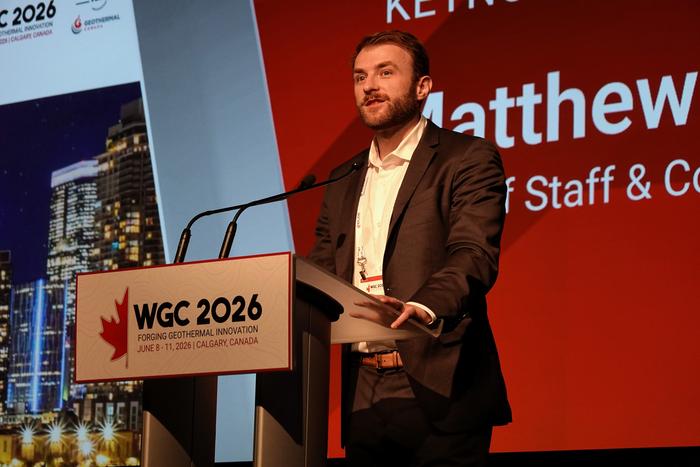

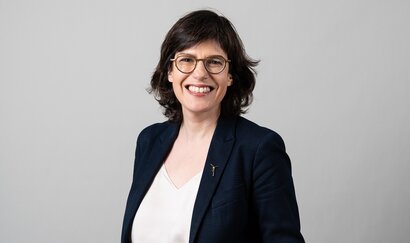
There, she played a key role in the expansion of offshore wind power (Belgium is one of the leading nations in Europe in this segment) and also in extending the operation of two nuclear power plants (a controversial decisión for Groen, a Green Party, made in the context of Russia’s invasion of Ukraine and the gas crisis).
As the new voice of European wind energy, Van der Straeten states that “the industry should be supported by state aid to sign renewable PPAs".
Did you ever imagine that you would become CEO of WindEurope?
Honestly, I didn’t. But when the opportunity arose, it felt natural. Renewable energies, and wind energy in particular, have always been at the centre of my work. Wind energy is something I genuinely love. So, stepping into this role felt like a natural continuation of my professional career. I am looking forward to working in an industry I have been passionate about for years.
Why did we have to wait 40 years to have a female CEO of WindEurope? And what do you think will be the difference, the added value?
The truth is that the WindEurope Secretariat – the staff working in Brussels – already has a very strong gender balance, also among team leaders and executives. Take for example Malgosia Bartosik, our Deputy CEO, has been shaping WindEurope for twenty years. In that sense, having a female CEO now simply feels normal. But isn’t about me. It’s about continuing to build a sector where diversity strengthens performance, improves decision‑making, and reflects the society we serve. And by the way, we know from longstanding research that gender‑balanced teams perform better.
When you were appointed as WindEurope's CEO, you stated that "wind energy is central to Europe’s energy independence, industrial competitiveness and climate ambitions". But is it not perhaps truer today than ever before?
Indeed. Wind is homegrown, it’s uniquely placed to boost Europe’s energy security, prosperity and competitiveness while delivering on decarbonisation.
European citizens and businesses want reliable, affordable and clean energy. The current geopolitical situation is a stark reminder that imported fossil fuels do not deliver that. The EU spends €500bn a year on energy imports – most of them fossil fuels. This has led to Europe’s dependence on volatile prices and foreign sources. Wind is now 20 percent of the electricity consumed in Europe. Together Europe’s wind turbines avoid 500 large oil tankers of fossil imports every year.
And wind energy boosts Europe’s economy. Wind contributes €52bn to Europe’s GDP each year. Nearly 400,000 people work in Europe’s wind industry across 250+ factories. This number is set to grow to more than 600,000 by 2030.
Grids. What are the solutions? What does WindEurope think are the solutions?
Grids are the biggest bottleneck to new wind energy projects. Europe needs to invest €584bn by 2030 to upgrade its grid infrastructure. But grid investment has long fallen short. This underinvestment leads to curtailed renewable electricity and higher energy bills. It undermines our energy security and the electrification of our economy. The EU Grids Package assumes a better coordination and top-down planning from Brussels. It proposes overriding public interest for grids projects and more interconnection capacity between countries.
Currently several hundreds of GWs of new wind energy are stuck in grid connection queues across Europe. To resolve this bureaucratic issue, the EU Grids Package recommends a shift from today’s “first come, first serve” principle to “first ready, first serve”, including new filtering criteria and project milestones. This new approach will help prioritise viable projects and filter out speculative “zombie projects”. This increases the visibility for permitting authorities and allows viable projects to move forward faster.
What are other challenges is the European wind sector facing?
Getting the most from wind energy still depends on European policymakers doing a few essential things. First, they need to fully apply the new EU permitting rules. These rules work extremely well: Germany is now permitting seven times more onshore wind than five years ago, which shows how powerful they can be when implemented properly.
Policymakers also need to remove the barriers that are slowing electrification. Industry should be allowed to use state aid to sign renewable PPAs, including for offsite power. And governments should cut non energy taxes and charges from electricity bills so that choosing renewables becomes the obvious and affordable option for consumers.
Another key challenge is investment risk. The sector needs a stable pipeline of two sided Contract for Difference auctions. CfDs reduce the cost of capital, give long term revenue visibility, and offer good value for governments. Without them, it is harder for companies to plan and invest with confidence.
Finally, Europe must support and strengthen its wind supply chain. A strong industrial base is essential for strategic autonomy, competitiveness, and economic growth. This includes ensuring a fair competition between European and non-European suppliers.
Investment Pact for the North Seas: What the main objectives are and whether you think they are all achievable?
With the Investment Pact, Europe is charting a massive offshore wind buildout - 300 GW of offshore wind in the North Seas by 2050. For the first time, this multilateral declaration goes beyond targets, and instead defines the specific measures required to deliver on Europe’s energy security and competitiveness objectives.
The Investment Pact includes commitments from three parties: Governments committed to building 15 GW of offshore wind per year over 2031-2040 and de-risking offshore wind investments. The industry, in return, pledged cost reductions by 30% towards 2040 compared to 2025, 91,000 additional jobs and generating €1tn of economic activity and investing €9.5bn in the value chain. The Transmission System Operators (TSOs) committed to identifying 20 GW of cost-effective cooperation projects in the North Seas by 2027 for deployment in the 2030s.
Trump is being very aggressive toward offshore wind power in the United States. It is very bad news for offshore wind sector in the USA. But, there are some sector voices saying that it is an opportunity for Europe? What do you think about it?
We heard what President Trump had to say about wind in Davos, and just days after we saw the European response at the North Sea Summit in Hamburg, where European leaders stood united and made clear that clean energy is a strategic priority for Europe.
Wind is homegrown, competitive and one of the most effective tools we have to cut our dependence on imported fossil fuels. Europe still spends hundreds of billions every year on gas imports. If we want to be truly independent, we need to replace that with our own clean, reliable energy.
But for that to happen, our own house must be in order. For wind energy this means clear rules, predictable auctions, fast permitting and strong grid planning. And it also means reinforcing trust in our democratic institutions. The rise of right‑wing narratives, populism and disinformation is not just an American trend. We see it in Europe too. Protecting democratic resilience must go hand in hand with building energy independence.
Belgium is a world leader in offshore wind energy. Are you one of the responsible people for that success?
When I became Energy Minister of Belgium there was already a long-standing heritage of offshore wind. This political project to build offshore wind in Belgium had been driven by determined pioneers who charted new territory: early movers from the industry, banks willing to lend money and many more. It’s a great example of political vision, entrepreneurial mindset and “can do”-attitude. It is on this foundation that I built, by adding stronger cross border collaboration on offshore grid across the North Sea.
Can offshore wind be the new "nuclear" energy? Or the renewable "nuclear" ? I am saying that because of its very elevated capacity factor.
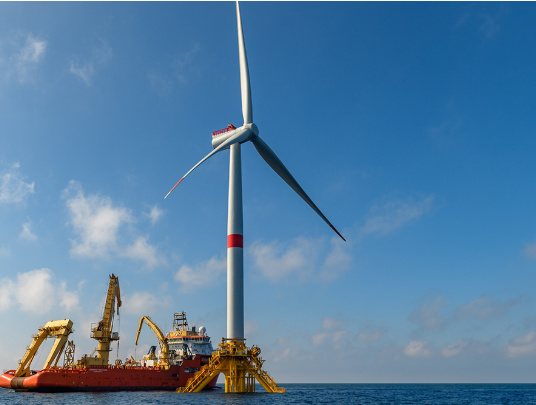
New onshore wind farms now run at capacity factors of 30-45%. That’s significantly higher than other sources of variable renewable power. And new offshore wind farms at 50%. You can build a stable power system around wind. Germany, Spain, Sweden, Denmark, the UK, Ireland, Portugal and Lithuania all get over a quarter of their electricity from wind already.
And in a study from last year, we have shown: wind and solar are the cheapest electricity sources, even when counting grid and system costs. Wind is scalable, faster to build than most other energy sources, and its costs are predictable. Large energy-consuming industries - chemicals, steel, aluminium, ICT, pharma, food/drink - want more power from wind and are signing more and more Power Purchase Agreements.
WindEurope has chosen Madrid to host its 2026 Annual Event, why?
Spain is at top of the wind energy scoreboard, with over 31 GW of power installed, over 37.000 people working in the wind sector. Wind already covers a quarter of Spain’s electricity demand, making it the number one source of electricity in the country. Wind energy is inherent to Spain now. That is why, Spain is a natural place to host the WindEurope Annual Event 2026.
When will Spain have its first offshore wind farm?
Spain has taken its first step towards launching offshore wind through a public consultation on its inaugural auction scheme. We hope the government will launch the first offshore tender still this year. This is a big economic opportunity for Spain. The first 1 GW of offshore wind alone could deliver as many as 4000 new jobs in Spain.
What is WindEurope's assessment of 2025?
The wind industry is stepping up to the task to strengthen Europe’s industrial competitiveness and energy security. Europe built 19 GW of new wind and invested additional €45bn in wind energy projects that will be built over the next years. These are strong figures given the current geopolitical uncertainties. But new political considerations to reform the EU electricity market design and to renegotiate the EU Emissions Trading System (ETS) threaten to undermine the progress made in 2025.
What are WindEurope's goals for 2026?
In 2026, WindEurope is working to speed up the build-out of wind energy and make it easier and cheaper to develop projects. We will focus on strengthening the business case for wind, building the electricity grids that we need, driving electrification, boosting energy security and countering wind energy-related disinformation. We are asking governments to run better auctions, simplify permitting, support repowering, and ensure Europe’s electricity market provides the necessary investment confidence.
For additional information: