
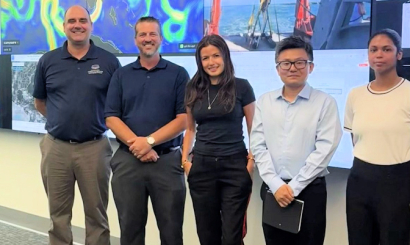
The discussions took place during a strategic meeting held at Florida Atlantic University, bringing together leading experts in marine renewable energy, artificial intelligence, digital twins, electrical engineering, ocean engineering, and energy systems optimization.
The initiative focuses on two complementary tracks designed to position Eco Wave Power at the intersection of renewable energy and AI infrastructure.
The first track centers on the continued development of WaveGPT, Eco Wave Power’s AI-driven operational intelligence platform. WaveGPT is designed to transform real-time operational data from Eco Wave Power’s wave energy installations into actionable insights through predictive analytics, forecasting, anomaly detection, performance optimization, and digital twin technologies.
As part of this effort, Eco Wave Power recently submitted a TEAMER application with Florida Atlantic University focused on data-driven energy flow mapping, operational intelligence, and predictive analytics for the Company’s wave energy technology. The project seeks to leverage advanced AI methodologies to enhance system performance, improve operational planning, and support future commercial deployments.
The second track focuses on a potential collaborative grant submission involving Eco Wave Power, Florida Atlantic University, and the University of Michigan aimed at developing a wave-powered, AI-optimized coastal data center concept. The initiative seeks to combine wave energy generation, advanced cooling technologies, digital twins, energy storage, and intelligent workload management into a unified platform capable of supporting future coastal AI and edge-computing infrastructure.
The Company’s focus on AI-enabled energy infrastructure and digital twin technologies has recently gained international visibility. Eco Wave Power’s technology was featured during NVIDIA Founder and CEO Jensen Huang’s GTC keynote presentations in both San Jose and Taipei, where the Company’s technology was showcased as part of demonstrations highlighting simulation, digital twins, and real-world infrastructure applications.
The concept is based on the premise that future data centers will require not only significantly more electricity, but also intelligent energy management and innovative cooling solutions. By locating data centers in coastal environments and integrating them directly with renewable energy generation and seawater-assisted cooling technologies, Eco Wave Power and its academic partners aim to explore new approaches for powering the AI economy with clean energy.
According to the project concept, the proposed platform would utilize AI-driven digital twins capable of forecasting wave conditions, computing workloads, cooling requirements, storage availability, and grid conditions in real time, enabling optimized operation across the entire energy-water-compute ecosystem.
Participants in the discussions included Dr. Yufei Tang, Director of the Florida Power & Light Center for Intelligent Energy Technologies (InETech) at FAU; Dr. James VanZwieten, Director of the Southeast National Marine Renewable Energy Center (SNMREC) at FAU; Mr. Gabriel Alsenas, Associate Director of SNMREC and InETech; Dr. Sasha Fung, Postdoctoral Researcher at FAU; Professor Lei Zuo of the University of Michigan; Louis King; and Wei-Ying Wong.
“Artificial intelligence is transforming how energy systems are designed, monitored, and optimized,” said Dr. Yufei Tang, Director of the FPL Center for Intelligent Energy Technologies (InETech) at Florida Atlantic University. “By combining marine renewable energy, advanced digital twins, predictive analytics, and intelligent control systems, we have an opportunity to develop next-generation energy infrastructure that is both sustainable and adaptive to rapidly evolving energy demands. We are excited to explore these research opportunities with Eco Wave Power and our academic partners.”
“AI is expected to become one of the largest drivers of electricity demand in the coming decade,” said Inna Braverman, Founder and Chief Executive Officer of Eco Wave Power. “We believe wave energy can play a meaningful role in supporting the next generation of coastal digital infrastructure. By combining wave energy, AI optimization, advanced cooling technologies, and digital twins, we are exploring how renewable energy can directly support the rapidly expanding needs of AI-driven data centers and edge computing facilities.”
While discussions and grant applications remain subject to review, funding approvals, and final agreements among the parties, Eco Wave Power believes these initiatives have the potential to create a new category of AI-enabled renewable energy infrastructure and further expand the Company’s role within the rapidly evolving energy landscape.