

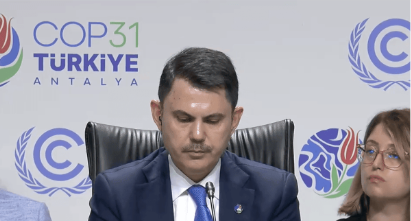
Multiple countries rejected a proposed text that failed to deliver climate justice, particularly by not mentioning fossil fuels as the primary driver of climate change. Furthermore, industry lobbyists heavily promoted risky and unproven technologies, which arguably include carbon capture and storage, that could prolong the use of fossil fuels.
High-income countries, the most responsible for global warming, obstructed progress on climate finance, adaptation and just transition. The co-presidencies, Türkiye and Australia, failed to secure an outcome that responded to the demands of lower-income countries, Indigenous Peoples, civil society and communities most affected by climate change.
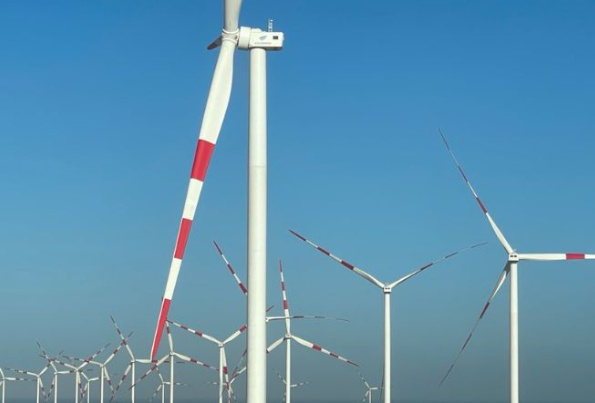
Türkiye prioritised increasing global electrification, but the proposed outcome neither committed to this being produced by renewable energy nor addressed profound inequalities in energy access. For example, more than 560 million people in sub-Saharan Africa still live without electricity. Electrification must support a just transition and serve people, not power artificial intelligence and data centres with fossil fuels to boost the profits of Big Tech and fossil fuel companies in high income countries while hundreds of millions remain without affordable and reliable renewable energy.
Lobbyists from polluting industries and their financial backers attended in record numbers, while human rights defenders and climate activists faced barriers to participation and restrictions on peaceful protest and expression, including within the UN-controlled venue. Although the People’s Climate March passed without incident, COP31 took place amid a wider crackdown in Türkiye, particularly against LGBTI+ people and organisations.
“Countries from across regions were right to reject the colossal betrayal that the COP31 co-presidencies tried to pass off as climate action” said Ann Harrison, Climate Justice Policy Advisor at Amnesty International, responding to the conclusion of COP31 in Antalya, Türkiye, without the adoption of a cover decision. “They resisted a polluters’ charter designed to protect corporate profits while sacrificing people and the planet. They refused to accept a deeply unjust text that failed even to name fossil fuels while opening the door to risky technologies that could prolong their use. Rejecting the dangerous ‘cover decision’ text was an important act of resistance. It prevented a predatory world order imposing a terrible outcome while hiding under the mask of consensus. But COP31 itself was a colossal failure. After two weeks of obstruction by high-income historically high emitting states, COP31 failed to deliver progress towards the fossil fuel phase out, finance for adaptation and loss and damage and just transition measures urgently needed to protect people’s rights and survival. Responsibility lies with the high-income, historically high-emitting states that blocked climate justice and the co-presidencies that tried to force through an outcome serving corporate interests. The rejection of a bad deal must not obscure the political failure that produced it. Communities already facing deadly floods, wildfires, droughts, displacement and hunger have been abandoned yet again. From the devastation in Nepal to deadly extreme weather across the world, the climate crisis is not waiting for governments to overcome their divisions. Governments must now deliver what COP31 failed to provide. The route from Antalya must lead to the Pacific in July 2027, where Tuvalu and Ireland will co-host the Second International Conference on the Just Transition Away from Fossil Fuels, and then to COP32 in Addis Ababa, Ethiopia. These meetings must move beyond red lines and obstruction to deliver a full, fast, fair and funded phase-out of fossil fuels, backed by massively scaled up grant-based and non-debt-creating climate finance to meet the actual level of need. People facing deadly floods, wildfires, droughts, hunger and displacement cannot wait through another cycle of broken promises. COP32 must not repeat this betrayal. It must put the rights, demands and leadership of the people most affected by climate change ahead of the interests of polluters.”
Amnesty International has repeatedly called on states to deliver a full, fast, fair and funded phase-out of fossil fuels during the COP process, as well as urging the provision of grants-based and non-debt-creating climate finance at the scale to match need; the scrapping of fossil fuel subsidies; taxing fossil fuel and other polluting companies’ profits; and ensure that all climate measures respect, protect and fulfil human rights.
Commenting on the conclusion of COP31, Climate Analytics's CEO Bill Hare said that the lack of an agreement on the main document should be seen as a failure of the COP process but as a “successful defence of the United Nations Framework Convention on Climate Change - UNFCCC’s integrity against a coordinated attack by a few countries implacably opposed to action on climate change, in particular to any mention of the need to transition away from fossil fuels.”
“Countries committed to a safer future drew a line in the sand and refused to sign up to a document that did not include any reference to phasing out fossil fuels yet did include a target for massive amounts of carbon capture and storage” Mr Hare said. “That was clearly unacceptable, and countries that refused to accept it were right to do so. The 35 by 35 electrification target would have been a step forward but was compromised through its failure to specify clean sources of electricity, but scores of countries are moving to accelerate electrification anyway. On finance, the clear failure of wealthy countries including the European Union to come up with believable and solid proposals to triple adaptation finance cast a pall over the negotiations. Looking ahead to next year's COP in Ethiopia, the EU clearly has to do a lot better on climate finance, as do other wealthy countries. What the non-agreement here means for the COP process will be worked out in the coming few months, but three lessons are already clear.
One is that the experiment where two countries share the presidency should not be repeated.
The second is that if the world is to move forward with a transition away from fossil fuels, many countries need to come prepared to push back against Saudi Arabia. This country has been the most implacable opponent of climate action for over 30 years and has had an outsize influence on three of the last five COPs - Sharm El Sheikh, Baku and now Antalya - and the international community has to stop that happening again.
Thirdly, with momentum building for countries to compile fossil fuel transition roadmaps, many more need to join this in 2027 so that by the COP in Ethiopia a large number of countries have roadmaps prepared or underway, to spur a global transition away from fossil fuels.”
Dr Jeni Miller, Executive Director of the Global Climate and Health Alliance, a consortium of more than 300 health professional and health civil society organisations and networks from around the world addressing climate change, said that the COP31 process has “betrayed people’s health by failing to deliver a clear plan for transitioning away from fossil fuels or providing the finance countries need to protect lives and prepare their health systems for escalating climate shocks.”
“COP31 and its presidents Australia and Türkiye did not deliver the necessary protection for people’s health and lives” added Dr Miller. “The rightly rejected ‘Antalya Pact’ comes as climate change compounds this year’s super El Nino, causing severe droughts in Fiji and Bolivia, extreme flooding in the western US, and wildfires in Southeast Asia, and putting millions of additional people at risk of hunger or famine.”
For additional information: