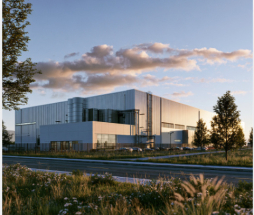

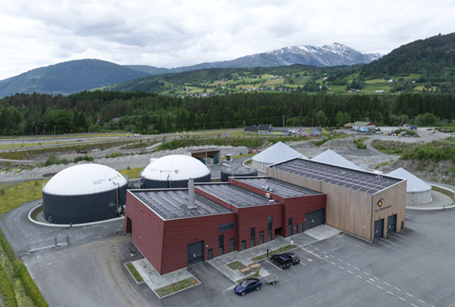
The latest joint project is BIR’s new biogas and biomethane facility in Voss, Norway. Developed by BIR, Western Norway’s largest waste management company, the plant was officially opened in December 2025, with biomethane upgrading operations starting in March 2026. It converts food waste and livestock manure into renewable biogas and biofertilizer. Behind the delivery are technical experts from Finland, partners across Europe, and strong cooperation with BIR and the Norwegian civil construction contractor LAB Entreprenør.
Nordic integration expertise for a complex project
Suomen Biovoima is one of the leading EPC contractors of Northern Europe for biomethane and biogas plants and related technology solutions. Biovoima works based on technology integrator principle: for each project, the company selects the most suitable technologies and experts from their own product portfolio and a wide partner network.
The two Finnish companies, Suomen Biovoima and Valmet, have worked together before. In 2022, Suomen Biovoima delivered the Baltic region’s first householdwastebased biogas plant, where Valmet’s automation supports high availability and safe operation.
Tero Kemppi, Project Manager from Suomen Biovoima notes, “This was our second industrial scale biogas plant delivered together with Valmet. The cooperation worked well. We appreciate that Valmet brought learnings and even people from the previous project into this one.”
In this project, Valmet DNAe played a central role in the delivery. BIR’s waste-to-energy plant also uses automation technology from Valmet. This provides opportunities to build on existing technical expertise and operational experience.
Precise scheduling behind the success
Construction of BIR’s plant began just before summer 2024. The cornerstone was laid in August 2024, and the plant was officially opened in December 2025. Biomethane upgrading operations started in March 2026.
Kemppi confirms the importance of continuous followup.
“Schedule monitoring is precise. It is ensured through regular followup meetings with suppliers. Our communication is open and frequent, which is essential for good cooperation.”
Petri Koskimäki, Project Manager from Valmet, said, “Because the project included several equipment suppliers and partly local control systems, success in automation required continuous technical coordination, interface definition and information exchange. The project demonstrated how crucial cooperation between automation and process design is in an integrationintensive project of this scale. In a multivendor environment, ensuring the functionality of system interfaces was a key part of commissioning.”
BREEAM certification shows a new way of working
BIR’s new facility has been designed and built with BREEAM environmental certification requirements in mind. BREEAM (Building Research Establishment Environmental Assessment Method) is a building-level environmental assessment framework addressing areas such as materials, energy use and documentation.
Kemppi explains, “LAB Entreprenør, responsible for construction, led the BREEAM design and documentation. Within Biovoima scope, the biggest impacts were related to ventilation and heating of the production facilities. BREEAM is a building level environmental certification, so it does not affect process technology. Since this was the first project of its kind, we learned a lot. It marks a significant step toward a new way of working.”
For Valmet, no additional technical specifications were required, but the project’s documentation and traceability requirements aligned well with BREEAM targets.
Next generation technology for a next generation plant
Automation also brought new technology to the project. Valmet DNAe, winner of the 2025 Automation Award, provides a modern automation platform for the Voss facility. It supports efficient, data-driven operation and ongoing process optimization.
Koskimäki notes that DNAe delivers precise, auditready energy and process data, supports efficient lowloss operation, strengthens safe operating logic, and ensures full traceability of material flows. For BIR, this results in higher reliability, stronger sustainability performance and clear longterm value.
Automation as the foundation for efficiency
Suomen Biovoima confirms that automation, process technology and construction solutions work seamlessly together. They also have strong internal automation expertise.
Automation testing progressed step by step from engineering and FAT to onsite testing and final commissioning. FAT ensured the functionality of the DNAe system and applications before delivery. On site, critical phases included I/O testing, verification of field devices, communication and PLC integrations, and testing of sequences, interlocks and controls together with the process.
Everything proceeded in good cooperation, and one clear benefit is the centralization of process information into a single automation environment.
A new reference built with new learnings
The Voss plant demonstrates how modern biogas facilities can combine advanced process technology, high-quality construction and integrated automation. It shows how regional waste streams can be transformed into valuable products through engineering expertise and Nordic collaboration. For BIR, the project strengthens its role in sustainable resource management and demonstrates the potential for large-scale circular economy investments to create long-term environmental and economic value.
Kemppi summarized, “The plant is built using the most modern organic waste processing technologies available for biogas plants. Its architectural design also played a major role, requiring integration of process solutions into complex structural elements.”
Both Valmet and Suomen Biovoima highlight the importance of cooperation between different stakeholders and expert teams. Communication worked exceptionally well which is one of the key success factors in this project. The customer’s values and ways of working aligned naturally with those of the suppliers.
Tiina Stenvik, Director, Process Automation, Valmet, says, “The new biogas facility in Voss, Norway, showcases how advanced automation, sustainability objectives, and strong partnerships can deliver tangible business and environmental value.”
AUTHOR: Soili Städter