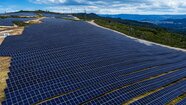

Solar is no longer an emerging technology proving its viability. It is now core energy infrastructure. Projects are larger, schedules are tighter, and sites are more demanding. Storage, grid connection requirements, data canters, industrial electrification, and the need for resilient power supply are changing the way renewable assets are designed, built and operated. Customers are looking for partners that can help reduce complexity across the whole project. That is why GameChange Solar is evolving into GameChange Energy.
This is not a change of ownership or a change of team. It is a name change that reflects the role the company already plays in practice: an energy infrastructure platform bringing together trackers, fixed-tilt mounting systems, eBOS, transformers, and robotic asset inspection under one identity. For developers, EPCs, and utilities, the goal is to make complex projects easier to deliver, coordinate, and operate.
From Tracker Specialist to Infrastructure Partner
When GameChange was founded, its focus was intentionally specific. PV mounting structures were often too costly, complex and slow to install. The company set out to engineer tracker and racking systems that could reduce construction complexity without compromising structural quality. That discipline helped GameChange become a reference name in utility-scale solar, with systems deployed across six continents.
But projects have evolved. A modern solar plant is not defined only by modules and trackers. It is a construction project, an electrical system, a logistics challenge, and a long-term operating asset. Trackers, foundations, cable routes, combiner boxes, transformers, monitoring tools, and inspection strategies all interact. A weak interface between any of them can create delays, additional cost or operational risk. GameChange Energy is designed for that reality.
The company’s expansion into transformers, eBOS and asset inspection has not moved it away from solar. It has moved it deeper into the project architecture. Transformer capabilities give developers and EPCs access to critical electrical infrastructure with the same focus on engineering and manufacturability that shaped the tracker business.
The acquisition of TerraSmart’s eBOS division added proven electrical balance-of-system expertise and a significant track record of deployments. The partnership with Raptor Maps adds another layer: data-driven asset health monitoring and robotic inspection through the integration of GameChange’s GeniusVision tracker monitoring software with Raptor Maps’ Sentry platform.
Taken together, these steps have transformed the company from a tracker and racking specialist into a broader energy infrastructure partner. The new name reflects that transformation.
Raptor Maps and the Operational Layer
The partnership with Raptor Maps is especially important because it extends the logic of integration beyond construction and into operations.
For years, the industry has focused heavily on lowering capex and accelerating installation. Those priorities remain essential, but the operational phase is where the quality of design decisions is tested every day. A solar plant may be constructed in months, but it is expected to perform for decades.
Large solar plants are difficult environments to manage. They can cover hundreds or thousands of acres, often in remote locations. Small issues can become expensive if they remain undetected. A damaged tracker, a misalignment, a post-weather-event anomaly or a construction-phase deviation is easier to address when it is found early and accurately located.
The GameChange and Raptor Maps partnership addresses that need by connecting tracker intelligence with inspection data. GeniusVision monitors tracker health and performance across the site. When it identifies an issue, Raptor Maps’ Sentry platform can collect targeted inspection data, reducing dependence on manual inspection cycles. That information then feeds back into the monitoring environment, helping teams prioritise corrective action and improve understanding of tracker behavior.
In practical terms, this turns monitoring from a passive layer into an active part of asset management. It supports faster diagnostics, more targeted O&M, better post-weather response and improved construction-phase verification. It also reinforces a broader point: performance is not secured at a single moment. It depends on design, installation, monitoring and intervention throughout the life of the asset.
LCOE Remains the Discipline
Behind the rebrand, the fundamental discipline remains the same: lowering the levelized cost of energy. LCOE is not reduced by one product or one decision. It is the result of hundreds of choices across engineering, procurement, logistics, construction, operations and maintenance. A lower equipment price can help, but not if it creates field complexity or reliability problems. Faster installation matters, but not if quality is weakened. Higher energy yield is essential, but so are uptime, serviceability and the ability to protect the asset under demanding site conditions.
GameChange Solar built its reputation by balancing those variables in tracker and racking design. GameChange Energy extends the same discipline across a broader part of the plant.
For EPCs, the value is practical: fewer coordination points, better sequencing, and less avoidable complexity. For owners and developers, the value is both operational and financial: reduced procurement risk, greater confidence in construction execution, and better visibility once the asset is energized. Across a 30-year operating life, these factors influence availability, maintenance cost, and project returns.
The move from GameChange Solar to GameChange Energy is a response to how value is now created in renewable energy infrastructure rather than a branding exercise.
What Customers Will Actually See
In practical terms, customers will still be able to buy individual solutions: trackers, fixed-tilt systems, eBOS, transformers, or monitoring. A project may need only trackers and eBOS. Another may require transformers.
Another may prioritize asset health monitoring through GeniusVision and Raptor Maps. The point is not to force a single package, but to give customers access to a broader platform, supported by a single engineering culture and a single corporate identity.
Customers will continue working with the same teams and technical experts they already know. The products, engineering standards, and customer focus behind the GameChange Solar reputation remain in place. What changes is the way the company presents its full scope to the market.
The GameChange Solar name-built trust because it stood for speed, bankable quality, practical engineering and customer focus. GameChange Energy carries those principles into a wider energy infrastructure context.
Engineering What Comes Next
The change from GameChange Solar to GameChange Energy is about recognizing that solar has become a mature infrastructure sector where performance depends on how well the whole system is engineered, built, connected and managed. The next phase of clean energy won’t just be defined by the number of megawatts installed, but how reliably those megawatts are delivered, how efficiently projects are built, and how well assets perform over time.
The name has changed because the company has grown. GameChange Energy's role is to help customers build cleaner power infrastructure with less complexity, lower risk and greater confidence across the full life of the asset.