

The Solar Energy and Battery Storage Market is rapidly transforming the global energy landscape by enabling reliable, clean, and decentralized power generation. By combining solar photovoltaic (PV) systems with battery storage technologies, this market addresses one of the biggest challenges of renewable energy-intermittency. Battery storage allows excess solar energy generated during the day to be stored and used during nighttime or peak demand periods, improving grid stability and energy reliability.
As the world accelerates toward decarbonization, energy security, and sustainability, solar energy paired with battery storage is becoming a cornerstone of modern power systems. This integrated solution is gaining traction across residential, commercial, industrial, and utility-scale applications, supported by technological advancements, falling costs, and favorable government policies.
One of the primary drivers of the solar energy and battery storage market is the global shift toward renewable and clean energy sources. Governments across the world are setting ambitious climate targets and implementing policies to reduce greenhouse gas emissions, significantly boosting investments in solar-plus-storage solutions.
The growing need for energy reliability and grid resilience is another major driver. Extreme weather events, grid outages, and rising electricity demand are pushing utilities and consumers to adopt battery-backed solar systems that ensure uninterrupted power supply.
Declining costs of solar panels and battery technologies, particularly lithium-ion batteries, have made integrated solar and storage systems more economically viable. Cost reductions have expanded adoption beyond large utilities to residential and small commercial users.
Additionally, the increasing focus on energy independence and self-consumption is encouraging homeowners and businesses to invest in solar energy with battery storage, reducing reliance on centralized grids and volatile energy prices.
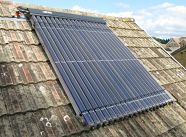
A major trend shaping the market is the rapid growth of residential solar-plus-storage systems. Homeowners are increasingly installing batteries alongside rooftop solar systems to maximize self-consumption, enhance backup power capabilities, and lower electricity bills.
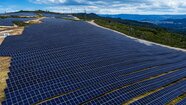
Another significant trend is the expansion of utility-scale solar energy and battery storage projects. Large-scale installations are being deployed to support grid balancing, peak shaving, and frequency regulation, helping utilities manage variable renewable energy generation.
The market is also witnessing increased adoption of hybrid energy systems, where solar and battery storage are combined with other energy sources such as wind, diesel generators, or grid power. These hybrid systems offer greater flexibility and reliability, particularly in remote or off-grid locations.
Furthermore, the integration of digital energy management systems is becoming increasingly common. Advanced software platforms enable real-time monitoring, predictive analytics, and optimized energy dispatch, enhancing system efficiency and performance.
Technological advancements are a key force driving the evolution of the solar energy and battery storage market. One of the most significant developments is the improvement in battery energy density and lifespan, allowing systems to store more energy in smaller footprints while offering longer operational life.
Advances in lithium-ion battery chemistry, along with emerging alternatives such as solid-state, sodium-ion, and flow batteries, are enhancing safety, performance, and scalability. These innovations are expanding the range of applications for battery storage systems.
Solar inverter and power electronics technologies are also advancing rapidly. Hybrid and smart inverters now enable seamless integration of solar panels, batteries, and the grid, supporting bidirectional power flow and grid services.
In addition, the adoption of artificial intelligence (AI) and IoT-based energy management systems is transforming system optimization. These technologies enable predictive maintenance, load forecasting, and automated energy dispatch, maximizing economic and operational benefits for users.
The solar energy and battery storage market is poised for robust growth as the global energy transition accelerates. Driven by technological innovation, declining costs, and the need for reliable and sustainable power solutions, solar-plus-storage systems are becoming integral to modern energy infrastructure. With expanding applications across residential, commercial, and utility-scale sectors and strong growth prospects across all major regions, the market represents a significant opportunity for stakeholders across the energy value chain.