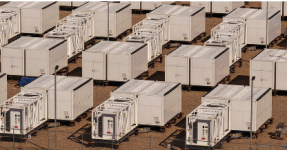


The survey consulted nearly 4,000 citizens across the US to assess their attitudes towards the technology for the renewable energy transition. American support for BESS appears to be contrary to the perception seen in the wider media, and yet opposition groups such as Authorities Having Jurisdiction (AHJs), very much a minority group, have influenced the outcome of nine separate BESS projects thus far, leading to plans being rejected or delayed, usually over fire safety concerns.
The latest survey from Firetrace International finds that lack of knowledge is driving the opposition, given that the majority (52 percent) of people opposing BESS have not encountered any information on BESS projects at all.
Misinformation – often fuelled by isolated, but high-profile, BESS fire incidents – has been a significant contributor to community opposition. Firetrace believes that this has to be countered, with developers and councils seeking to secure reliable clean energy production within communities engaging opposition groups in order to advance the further growth of BESS across the US.
To win over local communities, and calm opposition, developers must focus on educating citizens on the benefits of such projects. The survey found that most US citizens (52 percent) would be more comfortable with a BESS site if they had a clear “understanding of the benefits” of BESS projects.
When asked what benefits would make them more comfortable with a BESS site, a staggering 70 percent of citizens said they would if it created cheaper electricity bills, and 68 percent if it ensured reliable power. Nearly two-thirds (63 percent) of citizens would also support a BESS site if it led to more local jobs and economic benefits.
Going forward, developers will need to clearly communicate the advantages of BESS sites to local citizens and opposition groups; otherwise, more projects will be delayed or cancelled.
Environmental and safety concerns are another big driver behind local opposition to BESS sites. Almost half of local citizens (47 percent) said they would oppose a BESS project if it impacted the local environment, while 40 percent said due to concerns over toxic leaks and 38 percent over fire/safety risks.
The survey found that these concerns should be addressed with greater transparency, 48 percent said they would be more comfortable with a BESS site if they had a clear understanding around the impact on the environment and 47 percent on safety measures.
Taking steps to reduce fire risks at BESS sites is essential to boosting local support and winning over opponents. The survey shows that two-thirds (66 percent of US citizens would be more likely to support a BESS project if “fire suppression systems are installed – capable of suppressing a fire within a few seconds”.
Notably, the survey highlights that installing fire suppression at BESS sites is critical to shifting support. Almost a third (31 percent) of US citizens who oppose BESS sites said they are more likely to back a project if fire suppression was installed from the outset. This figure is representative of almost ten percent of US citizens who would ‘swing’ to support BESS at the all-important consultation / planning approval phase.
“There is clearly widespread public support for BESS projects in the US, which is very encouraging for the renewable energy transition” said Joe DeBellis, Global Head of Clean Energy Sector at Firetrace International. “But developers often face opposition from an increasingly passionate and vocal group of local citizens that is being fuelled by misinformation and a lack of understanding - leading to critically important projects being delayed or cancelled. Our survey shows a clear mandate for the industry. It simply must tackle this head-on by clearly explaining the benefits of BESS sites, as well as addressing environmental and safety concerns to citizens and opposition groups. The public has asked for transparency, and we must respond. By taking these steps, the industry can shift public opinion and secure planning permission for BESS sites that are ultimately essential to keeping the renewable energy transition on track.”
For additional information: