
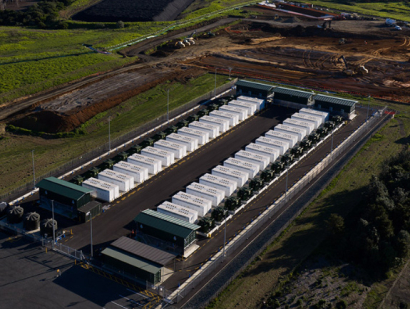
The 100MW battery, Glenbrook Ohurua Battery 1, is situated on NZ Steel leased land, close to Auckland demand and transmission.
With the rapid decline in the gas market, Contact’s new battery system strengthens winter energy resilience while demonstrating how New Zealand can build a more flexible, reliable and increasingly self-sufficient energy system, powered by renewable electricity, said Contact CEO Mike Fuge.
“This is more than new infrastructure; it represents a shift in how we power New Zealand’s future. As we move toward a highly renewable system, flexibility from assets like this battery support energy security when the sun doesn’t shine and the wind doesn’t blow. It also reduces exposure to global energy shocks and builds a more independent energy system for New Zealand,” says Mr Fuge.
The 100MW battery, located on land leased from NZ Steel, delivers fast, flexible electricity, powering the equivalent of around 44,000 homes for up to two hours when it’s needed most. The battery stores largely renewable energy when demand is low and supplies it back to the grid when demand is high.
Contact is already progressing Glenbrook Ohurua Battery 2; a 200MW project alongside the first battery, representing a further $235 million investment. Together, the batteries will provide up to 300MW of capacity, enough to power the equivalent of 132,000 homes for up to two hours during peak demand.
Mr Fuge said 98 per cent of the energy Contact generates is now renewable, and New Zealand is becoming one of the most renewable electricity systems in the world. He says the opportunity extends well beyond reducing emissions.
“In simple terms, this battery not only helps keep the lights on, reliably and sustainably, but more than that, it shows how New Zealand can turn its renewable advantage into economic opportunity, supporting electrification, creating jobs, and powering a more secure and self-reliant future,” says Mr Fuge.
While Glenbrook Ohurua Battery 1 officially opened today, Glenbrook Ohurua Battery 2 is expected to be online in early 2028.
Work started on battery one in July 2024 and has come in on time and under budget.
About Contact’s grid-scale battery at Glenbrook: