
New analysis from Vantage Waste Solutions reveals the UK’s disposable vape ban has failed to eliminate fire risks as they continue to contaminate the waste stream. New figures from Material Focus reveal more than 6.3 million vapes and pods per week are being thrown away despite the single use vape ban coming into effect in the UK in June 2025, posing a serious fire threat to waste and recycling facilities every single day.
According to recent data tracking UK battery fires, 23 percent of battery fires can be traced back to vapes, with 1,200 battery fires per year, and 91 publicly evidenced incidents since 2023. The issue is putting immense pressure on the waste sector, with fires posing a growing risk to waste facilities and operations. This has only been made worse by the recent spate out heatwaves, which has left large volumes of dry waste across the country, creating conditions in which fires can spread faster and become more difficult to contain.
Incorrect vape disposal is a serious threat to the public, yet while vapes and electronic cigarettes have been graduated to their own category 15 in August 2025 as the government updated its WEEE guidance, they’re still ending up in the wrong waste stream.
The issue has become increasingly significant as the regulatory framework around vape waste continues to develop. In July 2026, the government updated its WEEE evidence guidance with a new national protocol for calculating the battery content of vape waste, coming into effect from August 2026.
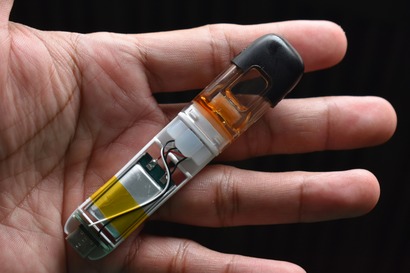
“The problem does not end with a vape being put in the bin” said Ben Clarke at Vantage Waste Solutions. “For the waste industry, the problem is the part of the vape you won’t necessarily see - the battery inside it. The battery itself isn’t the problem, either, it’s what can happen to the battery once it enters the wrong waste stream, which happens all too often, and becomes a critical social and environmental threat. E-cigarette users unknowingly throw vapes in the household bin or recycling thinking it’s harmless, yet it becomes a serious operational and fire risk once it’s compacted, crushed or damaged during waste recycling and disposal. Waste operators are facing these risks daily in real-world environments, and single battery failure can have serious - even fatal - consequences for members of staff, emergency services, waste facilities and vehicles. While the single use vape ban has set controls on products being sold and entering the market, the waste problem with vape disposal hasn’t disappeared as a result, as millions of vapes and pods are still being discarded weekly, and the waste sector is still dealing with the consequences. Waste operators must be aware of the risk of incorrect vape disposal. Vapes containing lithium-ion batteries must be segregated and licensed to dispose of these batteries safely.”
While the single use vape ban is an important step in the right direction towards reducing incorrect vape disposal, the risk posed by lithium-ion batteries remains a serious concern. With millions of vapes and pods still being discarded each week, these hidden batteries can enter thermal runaway when damaged in waste compactors, potentially causing fires. There are also concerns that newer devices contain more powerful batteries, meaning that when thermal runaway does occur, the consequences can be more severe. This reinforces the need for greater public awareness around the risks of disposing of vapes incorrectly and the importance of using the appropriate recycling and disposal routes.
Material focus research found that the number of battery fires in the waste stream are still rife, and rising, increasing 71 percent from 2022 to over 1,200.
Compromised lithium batteries can spark fires, posing a critical threat to waste collection and recycling plant staff as they face the risk of sudden combustion and inhalation of the toxic smoke byproduct. In turn, local emergency services like fire and rescue are increasingly under pressure as they repeatedly address preventable municipal fires.
Incinerated or melted vapes contribute to air pollution levels rising in local areas, as waste-stream fires release noxious smoke, microplastics and hazardous emissions into the atmosphere. Not to mention, incinerated vapes destroy finite, green-transition materials like lithium, copper and cobalt which would otherwise be recovered components for clean energy and green technology applications like electrical vehicle batteries.
Despite the ban on single-use vapes, the problem persists due to swappable-pod alternatives, a lack of public awareness as almost half of vapers said they were not aware of vapes being recyclable, and severe fire risks when lithium batteries are crushed.
Despite the single-use vape sales ban undoubtedly reducing the number of ‘disposable’ vape sales by 23 percent compared to 2025, ‘disposable’ vape still carries connotations of being ‘throw-away’, as almost half (47 percent) of vapers said they did not know they could recycle their vape.
Those who are aware their vapes need to be recycled do not always know that a household waste or recycling is the incorrect way to dispose of them. There’s a lack of awareness, it’s crucial the public is aware that vapes and pods need recycling at dedicated local recycling centres.
Vantage Waste Solutions offers three practical ways waste operators can approach the vape disposal problem:
Identifying: Identify the vapes as battery-containing electrical waste that can be extremely dangerous during handling.
Segregating: Segregating vape waste out of general waste for compliant recycling.
Treating: Using appropriate compliant routes for collection and recycling.
Lithium batteries aren’t inherently dangerous; it’s the incorrect use, storage or disposal that can make them a serious threat. Packing more power into a smaller device like a vape means more energy is released instantly if a failure does occur, and many of us are unknowingly using these batteries in our everyday lives - in vapes, headphones and portable electronics.
For additional information: