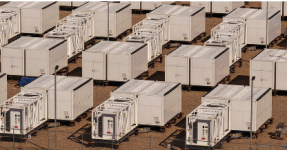

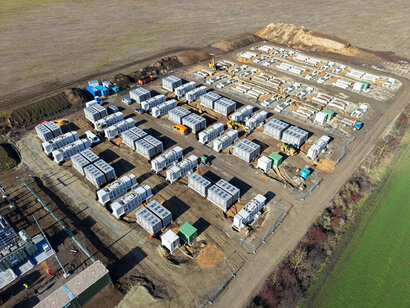
With a combined storage capacity of around 300 MWh, the assets are, according to Münch Energie, among the largest contiguous battery storage clusters currently in operation in Germany.
One of the three assets is currently considered the largest grid-connected co-located battery storage project in the country. An expansion of the cluster to approximately 800 MWh is planned for later this year.
The three assets – including one co-location asset with grid connection (grey power) and two stand-alone assets – each have a rated output of 49.5 MW and a rated capacity of 101 MWh. This corresponds to a total output of approximately 150 MW and a storage capacity of 300 MWh. The project illustrates the growing need for flexibility in the power system. As wind and solar power expand, so does the need to balance electricity generation and demand over time. Large-scale battery storage systems can absorb excess electricity when renewable generation is high and discharge when demand is high. They also help to stabilise grid frequency in the energy system.
“The value of a battery storage asset is not determined solely by its size, but by its impact on the market and the system” said Lennard Wilkening, CEO of suena energy. “When flexibility is deployed precisely, it simultaneously strengthens the integration of renewable energy, grid stability, and economic efficiency. Münch’s project marks a new level of scale for the German market. With these assets, we are supporting three pioneering projects.”
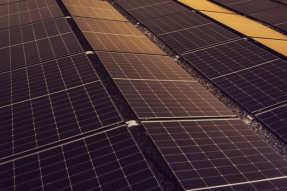
The grey-power co-location storage asset has been in operation since February 2026 and shares its grid connection with a 60 MWp photovoltaic system. With a combined grid connection capacity of approximately 50 MW, it is the largest battery storage asset in Germany to share a grid connection with a PV system and is simultaneously permitted to draw electricity from the grid. By combining power generation and storage, the project demonstrates how grid connection capacities can be utilised more efficiently, making it a pioneering model for future storage projects in Germany. With the rapid expansion of renewable energy and increasingly limited grid connection options, this concept is becoming significantly more important.
Nevertheless, the shared use of the grid connection by the storage asset and the PV system increases the complexity of commercial optimisation and operation: PV generation needs to be considered when optimising the storage asset’s market strategy. By using its own algorithms, suena energy ensures optimised performance of the storage assets despite these constraints.
The two other assets, which have been in operation since early March 2026, are stand-alone large-scale storage assets. These can draw energy from the grid, store it temporarily, and return it to the power system as needed. Battery storage systems respond within seconds to market fluctuations and demands in the energy system. Deployed across various electricity and flexibility markets, they can balance supply and demand, mitigate price spikes, better integrate renewable energy, and perform additional grid-supporting functions. Commercial optimisation thus becomes the key lever for translating technical flexibility into system-relevant and economic value.
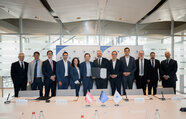
“Such projects require not only technological substance but also strong partners in commercial optimisation” added Mario Münch, Managing Director of Münch Energie. “With suena energy, we are experiencing a collaboration that combines technical expertise with a clear understanding of the requirements of our projects.”
This partnership represents a key development in the energy market: it is no longer only the construction of storage assets that matters, but their intelligent integration across the entire market and energy system. The next phase of the energy transition is not only about expanding renewable generation but also about ensuring that energy from wind and solar is available in a flexible, reliable, and cost-effective manner. Large-scale battery storage clusters and their commercial optimisation are therefore becoming a central component of tomorrow’s energy system.
For additional information: