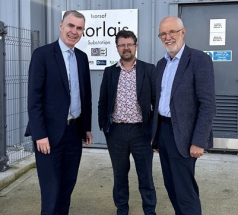


Under the agreement, RNC will serve as Ten-Nine’s representative in Japan, supporting engagement with automotive OEMs, battery manufacturers, cathode producers, trading companies, research institutions, and emerging battery innovators.
Japan remains one of the world’s most important centres for battery technology development and advanced manufacturing. Through the partnership, the companies will work together to identify new opportunities for TENIX, while supporting technical evaluations, customer qualification activities, and strategic market engagement.
“Japan has played a foundational role in the development of the global lithium-ion battery industry” said Paige Johnson, Chief Executive Officer of Ten-Nine Technologies. “RNC’s deep understanding of the Japanese battery ecosystem and extensive industry network make them an ideal partner as we continue expanding our global presence.”
Since May 2026, RNC has drawn on its established network to introduce TENIX to Japanese battery manufacturers, automotive companies, and cathode materials producers. Technical follow-up meetings have helped develop customer interest in TENIX’s potential to improve battery performance and opportunities for further testing.
“Japan is one of the world’s most important battery markets, but success here requires trust, technical understanding, and strong local follow-up” added Rune Nordgaard, Founder of Rune Nordgaard Consulting. “TENIX has demonstrated excellent performance in NMC and LMO cathode chemistries, with strong potential for all-solid-state batteries as well, and I believe it will be of real interest to battery and battery-related companies across Japan. We’re pleased to support Ten-Nine, whose professionalism, technical rigor, and commitment to customers give us confidence in introducing TENIX to potential partners in Japan.”
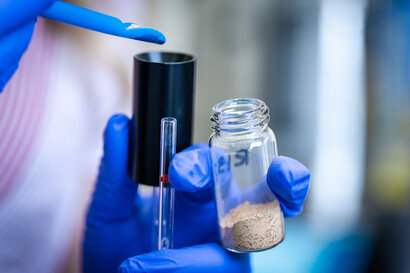
TENIX is an ‘anti-aging’ additive for batteries that stops the chemical decomposition responsible for sapping their power over time. It's blended directly into a battery's cathode material during manufacturing, making up just 0.5–2 percent of the cathode's weight, and requires no new equipment or battery redesign to adopt.
It is designed to integrate directly into existing cathode active materials and manufacturing processes, enabling battery manufacturers to improve performance without requiring significant changes to production infrastructure. The technology is currently being evaluated by battery manufacturers and materials companies around the world.
In third-party testing, TENIX delivered over 75 percent more charge-discharge cycles, extending a typical EV battery's life from 150,000 to more than 265,000 miles - and that longer life cuts the cost per kilowatt-hour by around 40 percent, while 10 percent lower resistance means faster charging and less energy wasted as heat. TENIX can also cut a battery's heat output by around 40 percent over its lifetime, a benefit that's becoming increasingly critical for AI-driven data centres.
For additional information: