
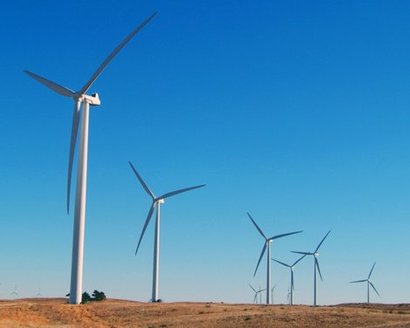
The report, entitled ‘Chain Reaction: Onshore supply chain must adapt for global growth’, draws on insights from leading developers, insurers, and investors from across the onshore wind market.
According to the report, long lead times for key components – including transformer delivery delays of up to 15 months – have become a leading bottleneck for wind projects across Europe. These delays often exceed the typical 12-month indemnity period for insured projects, which has increased the exposure to unplanned downtime and financial risk.
“That’s a significant risk preventing the whole site becoming operational if [delays happen] in the construction phase” said Rosa Van Reyk, Senior Underwriter at GCube Insurance Services, who contributed to the report. “Likewise, if the site is operational, you could be losing upwards of 15 months of revenue before a replacement is secured.”
The report also flags new regulatory demands, such as the Corporate Sustainability Due Diligence Directive (CSDDD) in Europe, which are increasing compliance burdens across the global value chain. This has created fresh operational drag - but also a push toward more integrated decision-making.
“All the directives are putting additional work for the supply chain to comply, so that’s also definitely something that has the potential to slow down the manufacturing” said Krystyna Aneta Puchalka, Head of Supply Chain for Renewables Onshore & Offshore, Ignitis Renewables.
Ms Puchalka argued that one-way developers could improve relationships with the supply chain was by having agile processes that encourage the right decisions, and speed on decisions, without layers of bureaucracy.
“Sometimes not overcomplicating things, instead of slowing things down, makes things much more straightforward” she said.
These directives are on top of existing regulatory hurdles for developers, including the permitting bottlenecks that make it tough for companies to secure the support they need for their schemes. Such permitting issues also make it hard for companies in the supply chain to know how much capacity will be delivered, and then invest in their operations.
Meanwhile, manufacturers are scaling up to meet global onshore wind targets, but face challenges balancing innovation with reliability. Publicised issues on major turbine platforms have triggered a shift in mindset among major developers and OEMs alike.
The report outlined that turbine manufacturers are starting to prioritise quality over constant iteration, which is a positive change. Delivering proven, reliable technology - and being selective about markets - is becoming a smarter play.
Digital technologies, particularly AI and simulation-based planning, are increasingly put forward as key enablers for improving resilience, cutting delays, and keeping onshore wind projects on track. Having recently expanded into the onshore wind market, Shoreline Wind is now applying its AI-powered platform, proven in the offshore market, to tackle risks across the full project lifecycle of onshore projects.
“We’re working closely with developers, service providers and asset owners, and we’re seeing a shift from reactive to proactive planning” said Ole-Erik Endrerud, CEO of Shoreline Wind. “With digital twins and AI, stakeholders can spot bottlenecks early, optimise schedules across portfolios, and avoid mistakes that cost time and money.”
Japanese developer, Renova, recently (April) announced the successful adoption of Shoreline’s platform on its 54.6 MW Reihoku-Amakusa project - coordinating component deliveries and workforce allocation/planning amid complex infrastructure and port access constraints. The results included reduced bottlenecks and smoother execution, allowing Renova to develop faster and more cost-effectively.
“We’re moving beyond the era of fast growth at any cost” Mr Endrerud added. “The next phase of onshore wind will be defined by intelligent planning, agile execution, and digital tools that help teams work better together. That’s how we build resilience and stay on track for net zero.”
For additional information: