

To reach this goal the German market for EVs would need to grow at a Compound Annual Growth Rate (CAGR) of 35% to 2030, according to GlobalData, a data and analytics company. Germany has set a target to become carbon neutral by 2045 with preliminary targets for cutting emissions by at least 65% by 2030 compared to 1990 levels, and 88% by 2040.
Mohit Prasad, Practice Head of Power at GlobalData, comments, “The transportation sector in Germany accounts for 20% of total emissions and so increasing the number of electric cars on the roads is vital for the country to achieve its emissions targets. With this in mind the German government’s recent announcement that plug in hybrid electric vehicles (PHEVs) will now be counted in the country’s EV target of 15 million electric cars by 2030. Earlier the target was limited to only BEVs.”
BEVs, as their name suggests, operate completely on batteries however PHEVs combine internal combustion (IC) engines with batteries.
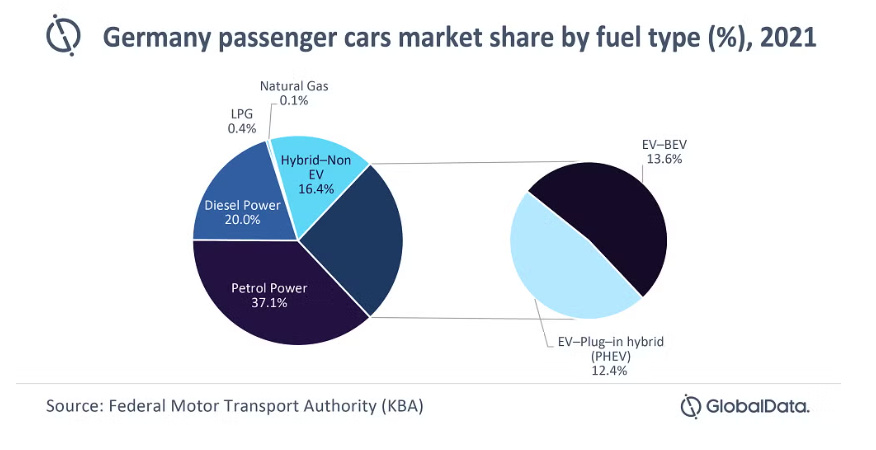
According to the German Automobile Association, despite the chip shortage and the global pandemic, Germany has seen a 73% jump in electric vehicles sales in 2021 compared to 2020 figures, contributing 26% of the overall sales of passenger cars.
The German governments innovation premium offered as part of the subsidy on the purchase of electrical vehicles has undoubtedly boosted sales of passenger cars, however this incentive expired at the end of 2021.
Prasad adds, “Germany already has one million electric cars on the road. Half of these are BEVs and the rest are PHEVs. While the inclusion of PHEVs in the count towards Germany’s EV target will boost the numbers however, they will also increase emissions from their IC engines which may affect the country’s timings on reducing greenhouse gas emissions from the transport sector by 2030.”