
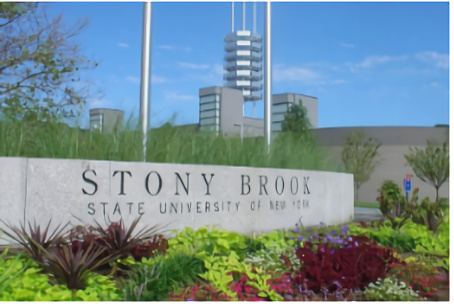
Dimitris Assanis, principal investigator and associate professor from the Department of Mechanical Engineering, along with Jim Acquaviva, strategic innovation director for the Office for Research and Innovation (OR&I), are leading this project at the Stony Brook University level.
“We got pretty excited as soon as we saw it wasn’t just going to be a small project in the laboratory,” Assanis said. “This is one of those types of projects where you can translate those equations from the classroom to learning on the bench top in the laboratory to now a physical real pilot where we’re showing how this new technology is actually changing, and how it will be able to change lives and will be a tool for future of energy conversion.”
The overall goal of this project is to make energy cleaner while maintaining grid reliability. This will be done by independently evaluating a hydrogen-powered linear generator and validating dispatchable, emissions-free energy source (DEFR) for New York State.
The linear generator is a high efficiency system that can run using multiple fuels including natural gas, propane, hydrogen, ammonia and blends thereof. Stony Brook’s role is to perform the independent technical evaluation of the power generation performance and emissions characterization of this system under various real-world seasonal conditions over 12 months.
Focusing on clean energy transition — specifically alternatives like hydrogen and ammonia — that lace carbon atoms into the fuel means traditional combustion emissions of CO2 and CO are not present. Thus, carbon emissions are reduced, improving grid reliability and providing on-demand clean energy during peak demand and emergency periods.
What makes this project unique is that this will be the first time anyone has tested a 100-percent hydrogen-powered linear generator in New York State and beyond. The project moves beyond lab research to on-site power plant deployment.
The project will have a real-world impact, especially for Long Island residents. It directly affects residents by providing a pathway to lower emissions and strengthening energy infrastructure in the future.
“This is about being able to reduce carbon emissions while improving the reliability of the electric supply for Long Island,” Acquaviva said.
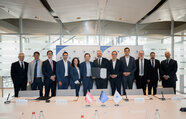
Major collaborators and their roles outside of Stony Brook University include: National Grid Ventures (project lead), Long Island Power Authority (grid operator), Mainspring Energy (technology provider) and NYSERDA (funding agency).
More than $4 million in total funding is going toward this project, with over $1.25 million to Stony Brook University. The funding supports the development of a new state-of-the-art mobile testing laboratory, equipment deployment and researchers for data collection and analysis during a year-long field test at a power plant.
The project is currently in early stages, with equipment deployment scheduled for Fall 2026. A full pilot launch is expected within the next 12 months at the Northport Power Station.
“This is a perfect example of what the new funding model for research may look like, so we can continue training our students and providing the very best engineers and scientists — and their research — out to the world to continue making an impact,” Assanis said.