
China will receive approximately 23 percent of global investment in renewable energy between 2005 and 2030, equivalent to about $1.2 trillion, said Francois Nguyen, senior advisor to the International Energy Agency on the development of renewable energy in China.
"China has a golden opportunity for investment in cleaner and more efficient power plants," Nguyen said, in an exclusive interview.
Such investment is being strongly encouraged by China's government. The National Development and Reform Commission (NDRC), the country's primary macroeconomic planner, has targeted renewable energy to make up 10 percent of China's total energy consumption by 2010, and 15 percent by 2020, compared with 7.5 percent in 2005.
Clear targets
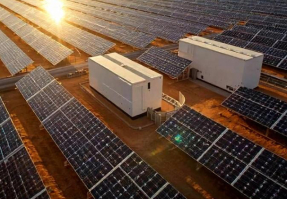
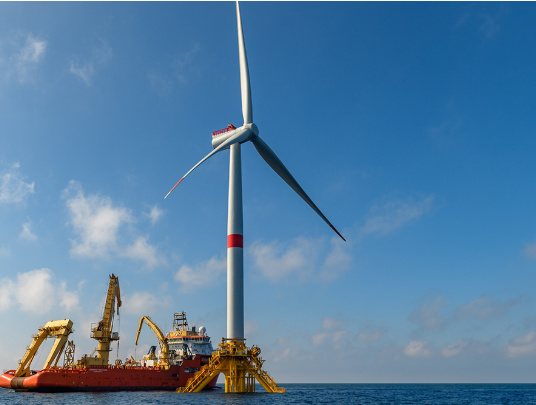
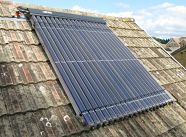
The NDRC has set clear industry-specific targets for this push. The commission aims for the country's hydropower generation capacity to reach 190 gigawatts (GW) by 2010 and 300 GW by 2020, compared with 115 GW in 2005; wind power generation capacity to reach 10 GW by 2010 and 30 GW by 2020, compared with 1.3 GW in 2005; biomass capacity to reach 5.5 GW in 2010 and 30 GW in 2020, compared with 2 GW in 2005; and solar power generation capacity to reach 300 megawatts (MW) in 2010 and 1.8 GW in 2020, compared with 70 MW in 2005.
Industry experts tend to agree that China will likely hit its targets. Former World Bank energy specialist on China's renewable energy development, Dr. Eric Martinot, told Interfax that the country's goals are reasonable, with the exception of those for biomass.
Underlying factors
Several factors are driving development. Firstly, China is the world's second largest energy consumer. If its economic growth continues, it will likely surpass the United States and become the largest consumer in a matter of years. As China is relying more and more on imported energy resources, it is becoming more sensitive to rising international prices and energy security issues.
Second, increasingly severe environmental problems are threatening China's economic sustainability. In two 2007 reports, the Chinese government acknowledged that global warming is a legitimate problem and climate change will likely damage the country's agricultural and water resources.
At the same time, China is working to address issues stemming from its energy resource make up. The country has little in oil and gas resources, but is rich in coal. Coal made up 70.2 percent of total primary energy consumption. Thermal power accounted for 77.82 percent of the country's total installed capacity at the end of 2006. In contrast, most countries use far less coal, usually about 30 percent to 40 percent of their energy sources.
More challenges
Although the Chinese government supports the development of solar power, current policy suggests that it does not view solar energy as an economically viable option in the near-term. Instead, the government is supporting the industry's export business, hoping to deploy solar in the country once costs drop.
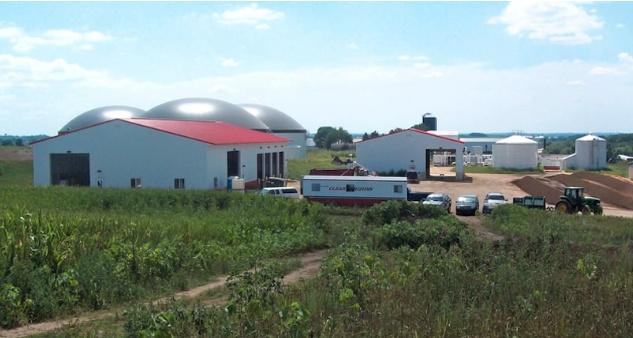
Bio-energy holds the greatest promise as an alternative fuel source as the nation has abundant natural resources. Based on current development targets, bio-energy is expected to contribute the same amount of power as wind by 2020.
However, faced with the task of feeding the largest population on earth, the government has shown caution, strictly limiting the development of feedstock that does not compete directly with the food supply. The country is building up plantations of various promising crops, such as jatropha curcas and cassava, and the industry is expected to develop rapidly once these resources are available.
Free updates
The China Clean and Renewable Energy report continues and expands on China's previous energy research. The special report is updated once in May and once in November. Updates will be delivered free of charge. The updates will include policy changes, new statistics covering production, imports and exports, supply and demand, new projects, forecasts for supply and demand fundamentals for the next half year, as well as forecasts for industry trends.
For additional information:
http://www.researchandmarkets.com/research/23a9d3/china_clean_and_r.