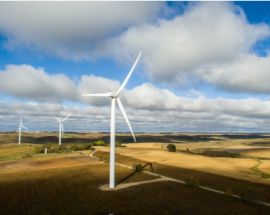


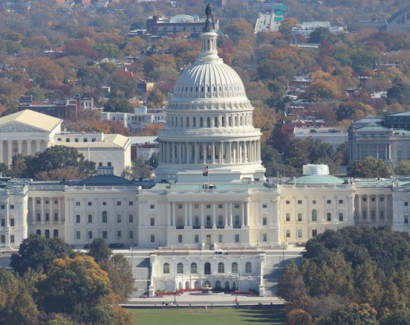
However, final passage now hinges on a small group of Democrats seeking tribal protections and assurances that President Donald Trump will not block wind and solar projects.
Trump cast doubt on those assurances hours before the vote. At a White House briefing, he said he supported the bill, then rejected a question about approving wind turbines.
“No, I will not approve wind turbines,” Trump said. He had called the bill “a great bill” and said, “We are behind it 100 percent.”
The vote on a procedural measure advances the legislation to an amendment process; it does not make the bill law.
Sen. Sheldon Whitehouse, D-R.I., said supporters expected a “very healthy amendment process.”
The bill would make it harder to challenge projects in court on environmental grounds and limit the ability of states and the Environmental Protection Agency to block them before construction. Its supporters also point to provisions intended to make it easier to build power lines and add electricity — including renewable power — to the grid.
Whitehouse argued before the vote that the bill would benefit consumers and cut emissions.
He said it could save consumers $60 to $80 a month and prevent 1.5 billion to 1.8 billion metric tons of greenhouse gas emissions.
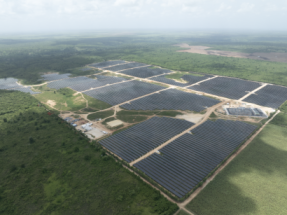
Whitehouse also said the measure would increase U.S. wind capacity by 25%, solar capacity by 28% and battery-storage capacity by 70%, though he did not mention the source of his numbers.
“This is a climate and clean energy bill,” Whitehouse said, adding that its effect on the power sector could exceed that of the Inflation Reduction Act, which he said had been weakened by Republicans.
Sen. Jeff Merkley, D-Ore., opposed advancing the bill.
He argued that its renewable-energy provisions would not offset measures he said could encourage more fossil-fuel use, including gas-fired power for data centers and expanded natural-gas pipelines and liquefied natural gas exports.
He said climate estimates that exclude gas burned overseas leave out emissions that still affect the global climate.
The bill’s project-certainty provisions are intended to prevent administrations from revoking existing permits and allow developers to sue over what the legislation calls “disparate treatment” of energy sources.
That could protect renewable projects from one administration and fossil-fuel projects from another.
The legislation also includes a provision requiring data centers to pay at least their fair share for the electricity and infrastructure they use, supporters say. The bill has support from industry groups in fossil fuels, renewable energy, chemicals, construction and manufacturing.
If the Senate passes the bill, it would move to the House, where it has support from Republicans and some Democrats but is expected to face opposition from progressive lawmakers. The schedule for amendments and a final Senate vote was not provided.
Whitehouse said the bill would be “the floor, not the ceiling” of Democrats’ climate and environmental ambitions.