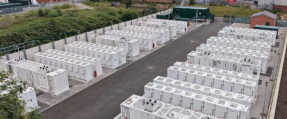


The Supernode BESS project is one of Australia’s largest battery energy storage developments. It is a large-scale battery storage development located at a key point in Queensland’s electricity network. The batteries act as a buffer for the power system, storing electricity when supply is high and returning it to the grid when demand increases or renewable generation changes. This helps maintain a reliable electricity supply while enabling more renewable energy to be integrated into the network.
Stages 1 and 2, which use GE Vernova technology, are now in full operation and are among the largest operational battery energy storage facilities in Australia’s National Electricity Market. Stage 3 will add a further 260 MW and 1,216 MWh of four-hour storage, bringing the full Supernode development to 780 MW and 3,075 MWh at a single site.
For Stage 3, GE Vernova will provide the power conversion system, plant controls, system integration and grid-connection support.
Stage 3 has already achieved Generator Performance Standards (GPS) acceptance, an important grid-connection milestone. GPS acceptance establishes the agreed technical performance standards applicable to the project’s connection to Australia’s National Electricity Market.
“Battery storage is becoming part of the operating foundation of modern electricity systems” said Ed Torres, Business Leader Power Conversion & Storage, GE Vernova’s Electrification segment. “Supernode shows what is possible when storage, power conversion and intelligent controls work together at scale. Our engineering and integration work helped Supernode Stage 3 secure Generator Performance Standards acceptance. This important grid-connection milestone demonstrates the strength of our technology and our ability to support complex projects in Australia’s demanding grid-connection environment. We are proud to expand our partnership with Quinbrook and bring grid-forming technology to Australia.”
Grid-forming technology extends the role of batteries by enabling them to actively support system stability, providing some of the capabilities historically delivered by conventional power plants, including frequency support and system strength.
“From the outset, Supernode was designed as more than just a battery storage project” added James Allan, Senior Director, Quinbrook. “Its unique location at the heart of Queensland's transmission network makes it ideally placed to support the state’s transitioning power system well into the future. The site also has capacity for a further 520 MW of expansion, which could include battery storage, data centres or a combination of both. Opportunities to develop infrastructure at this scale, in such a strategically connected location, are exceptionally rare.”
For additional information: