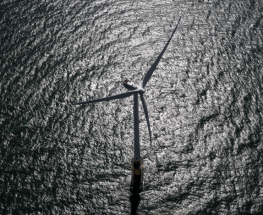

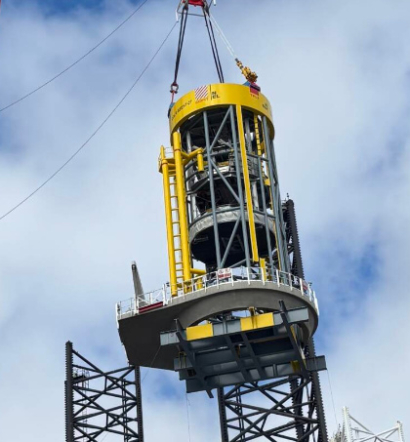
The installation is the first of 197 monopile foundations Cadeler will transport and install as part of the company’s full transportation and installation (T&I) scope for the project.
Once completed, Hornsea 3 will become the single largest offshore wind farm in the world, with a total capacity of 2.9 GW – capable of powering more than 3.3 million UK homes with renewable energy.
The Hornsea 3 project marks the first time Cadeler takes on the complete T&I scope for offshore monopile foundations. The successful installation of the first complete monopile foundation follows years of planning, engineering, and coordination across teams onshore and offshore. It reflects the coordinated execution of multiple specialised offshore scopes across vessels and project partners. The monopile itself was installed by Cadeler’s purpose-built A-class vessel, Wind Ally, while Wind Orca executed the installation of secondary steel.
The full commissioning scope was carried out by the service operation vessel ESVAGT FROUDE, operated by the Danish company ESVAGT. Boston Energy has delivered the post-installation commissioning and completion scope for the foundation.
As part of the broader Hornsea 3 installation scope, Cadeler will deploy three of its own specialist offshore wind installation vessels, including its first A-class newbuilding, Wind Ally, purpose-built to support the transportation and installation of XXL monopile foundations.
Bradley Scott, Project Director at Cadeler, commented, “This milestone is not just about the first structure in the ground – it represents an important step as we continue expanding into full-scope foundation transport and installation. Delivering projects at this scale requires close collaboration, detailed planning, and strong execution across every phase of the operation.
"We are proud to support Ørsted on Hornsea 3 and grateful to all teams offshore and onshore whose commitment and collaboration have contributed to reaching this point safely and successfully.”
With a capacity of 2.9 GW, Hornsea 3 will produce enough low-cost, renewable electricity to power more than 3.3 million UK homes, making a significant contribution to the UK government’s ambition of having 50 GW offshore wind in operation by 2030 as part of the British Energy Security Strategy.
Hornsea 3 will support up to 5,000 jobs during its construction phase, with up to a further 1,200 permanent jobs both directly and in the supply chain in the long operational phase. Hornsea 3 will be operated from Ørsted’s operations and maintenance hub in Grimsby.
Hornsea 3 is located 160 km off the Yorkshire coast. When the wind farm comes online, Ørsted’s Hornsea trio – comprising Hornsea 1, 2, and 3 – will have a total capacity of in excess of 5 GW, making it the world’s largest operating offshore wind zone.
The Hornsea zone will also include Ørsted’s Hornsea 4 project, which could have a capacity of up to 2.6 GW. Hornsea 4 received its development consent order from the UK government earlier in 2023 and is now eligible for forthcoming CfD allocation rounds.