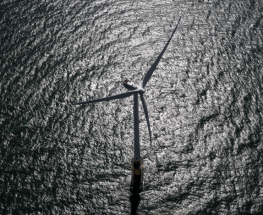

With its distinct wind conditions, 250-metre-high meteorological masts, seven foundations for wind turbines up to 250 metres with a capacity of 15-20 MW and a unique concept for connecting the wind turbines to the electricity grid, Østerild will be “tomorrow’s workshop for wind energy research”.
The grid connection capacity of the entire facility can receive electrical current from seven wind turbines, each up to 16 MW, while the test centre can be further expanded according to need. The first wind turbine is expected to be erected at the end of 2011 or the beginning of 2012.
“The national test centre for wind turbines at Østerild is vitally important for consolidating and expanding Denmark’s leading position within the wind energy sector”, declared the Danish Ministry of the Environment.
It is hoped that Østerild will pave the way for more wind energy in the Danish energy system, thereby contributing to making Denmark independent of fossil fuels. “Tomorrow’s mega wind turbines measuring up to 250 metres in height can be tested, and it is therefore here that the wind turbines of the future will be developed and produced. The test centre will thus help to safeguard lots of Danish jobs within the wind energy sector, both at the wind turbine manufacturers and at the numerous sub-suppliers to the wind energy sector,” said the Ministry.
The national test centre is going to be big. On a more than 4-kilometre-long site, seven mega wind turbines up to 250 metres in height will be erected for testing purposes. Moreover, 150-metre-high measuring masts will be constructed to perform measurements on these massive wind turbines, as well as two 250-metre-high light masts which will also be used for meteorological measurements. The measuring masts will thus almost rise as high as the pylons on the Great Belt Link. Mega wind turbines will cost in the region of several hundred million Danish kroner each.
“This initiative is vitally crucial to preserving Denmark’s leading position within wind energy R&D and thereby safeguarding the Danish wind turbine industry’s dominant role in the global wind turbine market,” says Peter Hjuler Jensen, Head of the Wind Energy Division at Risø, the National Laboratory for Sustainable Energy at the Technical University of Denmark (DTU).
The Østerild test centre will supplement Risø’s existing test station for large wind turbines at Høvsøre in western Denmark south of Lemvig. At Høvsøre, it is only possible to test wind turbines up to 160 metres in height, and there are also significant topographical differences between Høvsøre and Østerild.
New knowledge for wind power meteorology
The extremely varied landscape at Østerild presents new opportunities for examining the dominant wind conditions present in different types of terrain. “We will exploit this to expand our theoretical knowledge within wind power meteorology, and we can then verify the theories through measurements at Østerild. Østerild therefore presents unique possibilities for improving our calculation models,” says Peter Hjuler Jensen.
Researchers will also study the wind conditions at different heights, because not that much is known about wind conditions in the air strata above 250 metres where the wind turbines operate. “There hasn’t really been a need for it before now,” says Peter Hjuler Jensen. Together with Light Detection and Rangings (LIDARs), the new 250-metre-high measuring masts allow wind measurements at considerable heights. This will ensure less uncertainty in the calculation models, giving the wind turbine manufacturers a higher degree of certainty that they are designing wind turbines correctly in relation to the conditions, which leads to increases in operational reliability and lifespan as well as cost-effectiveness
“Moreover, we get a much more precise determination of wind resources, which makes it more certain that the major investments in wind turbines will generate the expected returns,” says Peter Hjuler Jensen.
Advanced grid connection
Østerild is expected to offer unique possibilities to test how best to connect wind farms to the electricity grid without the risk of grid system failure. An advanced grid-connection facility is planned, which will make it possible to test the wind turbines under varying conditions without affecting the overall electricity grid. It is vitally important to study this aspect in depth as an ever-increasing proportion of electricity production is coming from wind power, and wind turbines therefore need to make a greater contribution to maintaining a reliable grid.
With Risø as the lead partner, a consortium has been set up with e.g. Vestas, Siemens, Suzlon, Gamesa, DONG Energy, Vattenfall and ABB, which has received funding from the Energy Technology Development and Demonstration Programme (EUDP) for a preliminary project. This is expected to be completed at the beginning of 2011. The EUDP preliminary project will help to assess the possibilities for building an advanced grid-connection facility.
Once the preliminary project has been carried out, the grid facility can be ready for use by early 2013. The test centre is designed for seven 16 MW wind turbines, or 112 MW in all, a huge amount of electricity, so the test facility therefore needs to be connected to the overall 150 kV grid.
“Basically, we will be able to insert a filter between the wind turbines and the electricity grid by switching between DC and AC and back again. This enables us to test things on the wind turbines which the electricity grid is unable to ‘see’ or ‘feel’, which is a basic requirement for being able to experiment with the connection of wind turbines to the grid. After all, we do not want to see the test centre at Østerild causing power cuts in the grid as a result of the researchers’ experiments,” says Peter Hjuler Jensen.
In addition to testing mega wind turbines, Østerild will also make it possible to study CO2 exchange between woods, the landscape and the atmosphere, a central element when assessing tomorrow’s climate changes. It has also been agreed that the test centre will be home to a monitoring programme that can help Denmark to become world-leading, not just within wind energy research but also regarding the impact of wind turbines on the natural world.
For additional information:
____________________________________________________________________