
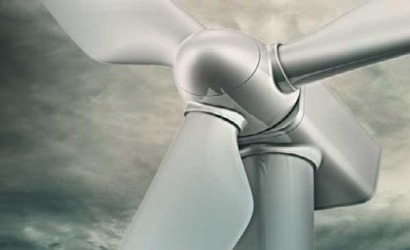
The UK has Europe’s biggest wind resource, as well as an ambitious programme to roll out 40 GW of offshore wind capacity in coming years. In April the region reached 1 GW of installed offshore wind, while a further 4 GW of capacity are already in construction or with planning consent. The UK's Crown Estate Round Three offshore wind zones, announced in January, alone could lead to the delivery of 25 GW of capacity – a quarter of the UK’s electricity needs – by 2020.
However, until now, the UK has had no dedicated full turbine test facility. To resolve this shortfall, the Energy Technologies Institute (ETI) has announced that it will invest £25 million in an indoor test rig at the National Renewable Energy Centre (Narec) in Blyth, Northumberland, capable of testing complete drive trains and nacelles up to 15 MW.
Commenting on the news, the UK’s Business Secretary Vince Cable said: “Combined with our strong manufacturing and maritime heritage, the UK is well positioned to take advantage of the global shift to clean energy. To do that we need substantial investment, and today’s announcement of this state-of-the-art test facility shows our determination to support the renewable energy sector that is helping to reshape the British economy for the future.”
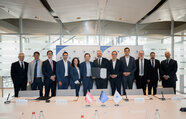
The ETI will provide funding to a consortium of Converteam and MTS Systems Corporation for the design, development and commissioning of the test rig, which should be available for commercial testing from June 2013.
Driving down costs
The test rig is capable of providing 15 MW of power, as well as creating the dynamic conditions that wind turbines would expect to see when installed offshore. It will be larger and more complex than anything currently available and will help manufacturers increase the reliability of their new turbines, with the benefit to consumers of reduced energy costs.
The rig has been designed to allow the whole turbine nacelle to be tested, in a purpose built, onshore test facility before being exposed to the challenging offshore conditions. This will help reduce the technical and commercial risks of mass production and deployment.
The harsh operating conditions and logistics of operating and maintaining machines far from shore drives up the generating cost of offshore wind. Drive train failures have a significant impact on the economics of offshore installations
World leading project
“This is one of the biggest projects the ETI has been involved with to date and highlights the importance of ensuring offshore wind can be used as a sustainable and affordable energy source for the UK,” said ETI Chief Executive, Dr David Clarke. “The ETI is accelerating the deployment of technologies that will help the UK meet its 2050 greenhouse gas reduction targets and develop the UK industrial base. This is a world leading engineering project that will benefit manufacturers, consumers and the UK economy as a whole by helping to increase the reliability and reduce the costs of electricity from offshore wind.”
Preparatory construction and infrastructure works have already commenced at Narec in Blyth, ahead of the start of building construction later this year. “This is a major step in establishing the UK as a leader in the wind turbine industry,” added Clarke.
The test rig will be sited alongside Narec’s rapidly expanding facilities for testing wind turbine blades and marine energy systems.
“Demand for the facility is high with a number of wind turbine manufacturers already having made a clear commitment to undertake accelerated lifetime testing of their prototype machines in the 5 to 10-MW range at Narec from 2013,” revealed Andrew Mill, CEO of Narec. “Narec is providing the route to market for manufacturers looking to sell their wind turbines into the UK for Crown Estate Round 3 developments. Our new 100-metre wind turbine blade testing facility and a 3-MW drive train test facility for both wind and marine applications will be commissioned next year. This 15-MW facility will be operational in summer 2013 and we hope to have the first deployments at our proposed offshore demonstration facility in 2014.”
For additional information: